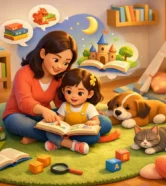



The backpack is paked. The tiny shoes are lined up by the door. Everyone is trying to sound cheerful.
But somehow, the biggest thing in the room is not the backpack or the shoes.
It is the worry.
For many families, starting school brings up a lot more than excitement. It can bring a lummp in the throat at drop-off, fear of getting something wrong, worry about making friends, or the ache of being away from home.
That is why the best children’s books about starting school anxiety do more than explain what school looks like. They help children feel seen in the hard part.
A good starting-school book can make a vague fear feel more manageable. It gives children words for what they are feeling. It also gives parents a gentler way to talk about what is coming.
But not every book helps in the same way.
Some books are bright and reassuring, which can be perfect for mild nerves. Others are better for children whose anxiety shows up in their bodies, routines, or need for extra comfort. Choosing the right one can make a real difference.
What Makes a Starting-School Book Actually Helpful?
The most supportive books do not rush children past their feelings.
They make room for them.
A child who is nervous about school does not usually need to hear, over and over, “School is fun.” They need to know that feeling scared is allowed. They need to know that new places can feel unfamiliar at first and still become safe over time.
That is why the strongest books often name specific worries.
They might show a child feeling nervous about saying goodbye to a parent, not knowing the rules, making friends, using the bathroom, or speaking up in class.
When fears are named clearly children often relax a little. The story sounds like real life, not a perfect version of it.
It also helps when a book shows coping, not just comfort.
Reassurance matters. But children also need small tools they can remember. Look for stories where a character takes a deep breath, brings a comfort object, finds a kind teacher, repeats a helpful phrase, or gets through the day one small step at a time.
Those little details quietly teach resilience.
Tone matters too.
A book can be warm and hopeful without pretending the transition is easy. That balance is often what anxious children need most.
12 Children’s Books About Starting School Anxiety
Some families want a classic first-day-of-school story. Others need something more emotionally specific.
These books support different kinds of school worries, from separation anxiety to friendship fears to general first-day nerves.
1. The Kissing Hand by Audrey Penn
The Kissing Hand is often one of the first books parents reach for when a child is worried about school.
And for good reason.
It speaks directly to separation anxiety. The story gives children a simple ritual they can hold onto when they are away from a parent or caregiver. That can feel comforting at bedtime, on the way to school, or right before drop-off.
Its biggest strength is emotional warmth.
The only limitation is that it focuses mostly on separation. It may not address other practical school worries, like using the bathroom, making friends, or understanding classroom routines.
But for a child whose biggest fear is leaving home, this can be a very comforting choice.
2. First Day Jitters by Julie Danneberg
First Day Jitters works because it normalizes nervousness in a playful way.
Without giving too much away, the story reminds children that even people who seem confident can feel anxious about a first day.
This can be especially helpful for children who feel embarrassed about being scared.
It lowers the pressure to act brave all the time. It gently says, “You are not the only one who feels this way.”
Sometimes that is exactly what a child needs to hear.
3. Wemberly Worried by Kevin Henkes
Wemberly is not only worried about school.
She worries about everything.
And that is why so many families love this book.
If your child tends to worry about many things and school is just the next big worry, Wemberly may feel very familiar. The story is gentle, observant, and honest. It does not force a huge emotional breakthrough.
Instead, it shows that comfort can grow slowly.
For children who need reassurance without being pushed, this book can feel very safe.
4. Llama Llama Misses Mama by Anna Dewdney
For children who respond well to rythm and repetition, Llama Llama Misses Mama can be especially effective.
It captures the intensity of early separation and the overwhelm of a new classroom. The feelings are big, but the story stays warm and reassuring.
Some children connect strongly with this book because it feels true to the experience of starting school.
It does not make separation seem easy, but it does show that a child can miss a parent and still begin to feel safe.
5. The Pigeon HAS to Go to School! by Mo Willems
This book has a completely different tone.
It is funny, drammatic, and full of protest.
For some children, that is exactly what works.
Humor can create enough distance for a child to look at their fear without feeling overwhelmed by it. If your child expresses anxiety through refusal, stalling, arguing, or loud complaints, this book may open the door more easily than a very tender story.
It lets children laugh while still recognizing real worries underneath.
6. School’s First Day of School by Adam Rex
This story is told from the school building’s point of view, which makes it feel fresh and imaginative.
It can help children see that starting school is an adjustment for everyone, even the school itself.
For children who feel uneasy about the building, the classroom, or the unfamiliar environment, this book can make school feel less intimidating.
It turns the school from a strange place into something more relational and approachable.
7. Chu’s First Day of School by Neil Gaiman
Chu’s First Day of School can be a good fit for children who are quiet, observant, or slow to warm up.
Chu watches carefully before fully joining in, which mirrors how many anxious children approach new places.
This book is less direct about anxiety than some others, but that subtlety can be helpful.
Not every child wants a book that names their fear too clearly. Sometimes a softer story is easier to accept.
8. We Don’t Eat Our Classmates by Ryan T. Higgins
At first, this may not seem like a book about school anxiety.
But it can be surprisingly helpful for chidren who worry about social mistakes.
The story uses humor to explore what it feels like to want to belong, get things right, and figure out how to treat classmates. Because it is funny, it lowers defensiveness.
This book works especially well for children whose school anxiety is more about peers than drop-off.
It can lead to gentle conversations about friendship, mistakes, and trying again.
9. Mae’s First Day of School by Kate Berube
Mae is brave, but she is also unsure.
That is what makes this story feel so honest.
It respects both parts of the child: the part that wants to be courageous and the part that is not quite ready yet.
Mae’s First Day of School is a strong choice for children who may not have big outward meltdowns but still feel deeply uncertain inside.
It captures the feeling of stepping into a new social world and needing time to settle.
10. Butterflies on the First Day of School by Annie Silvestro
This book gives children a clear and gentle metaphor for anxiety.
Butterflies are familiar. They are not frightening. That makes them a helpful way to talk about body-based feelings.
For children who say their tumy hurts before school or who struggle to explain what anxiety feels like this kind of language can be very useful.
It gives parents a simple phrase to return to later:
“Are your butterflies busy today?”
Sometimes one small phrase can make a feeling easier to talk about.
11. The King of Kindergarten by Derrick Barnes
Not every anxious child needs a quiet, soothing book.
Some children need a story that helps them picture themselves as capable, welcomed, and proud.
The King of Kindergarten offers that kind of confidence.
It is joyful, affirming, and full of warmth. It can be especially powerful for children who need help imagining themselves walking into school with a sense of belonging.
For the right child, this book can turn nervous energy into excitement.
12. A Personalized Story About Your Child Starting School
Sometimes the most helpful book is not a general school story at all.
Sometimes a child needs to see their own name, family, routines, and worries in the story.
This can be especially helpful when the anxiety is specific.
Maybe the child is worried about a particular teacher. Maybe they are entering a bilingual classroom. Maybe there is a new sibling at home, sensory overwhelm, a recent move, or a fear of being one of the only children who looks like them.
In those cases, ppersonalized storytelling can make a meaningful difference.
When a child sees their own life reflected in the pages, the message can land more deeply:
“This story is about me.”
“And I can handle this.”
For families looking for a more tailored emotional support tool, brands like Maple Kids create stories around a child’s actual transition, not just the general idea of starting school.
That kind of personalization can help children feel seen, prepared, and less alone.
How to Choose the Right Book for Your Child
The best book depends on what your child is actually worried about.
If the main challenge is separation, choose a book that focuses on goodbye rituals, love, and reconnection.
If your child is worried about classmates, look for stories about friendship, belonging, mistakes, and repair.
If your child tends to hold stress inside, a quieter book may feel safer than a silly, high-energy one.
It also helps to think about your child’s reading style.
Some children want the same story every night because repetition helps them feel in control. Others need variety because one book can start to feel too connected to the worry.
Neither response is wrong.
Representation matters too. A child is more likely to connect with a story that reflects their family structure, culture, language, personality, or everyday life.
Feeling seen is part of feeling safe.
How to Use School Anxiety Books at Home
Reading a book once can help.
Reading it in a connected, low-pressure way can help even more.
Try introducing the story a few weeks before school starts, not the night before. This gives your child time to absorb the ideas without connecting the book only to immediate stress.
Pause when your child reacts.
If they point to a page and say, “I feel like that,” stay there for a moment. You do not need to rush toward a lesson.
Often, the most healing part is simply being understood.
You can also borrow language from the story during real moments.
You might say:
“Your butterflies are busy today.”
“Let’s do our goodbye kiss like in the book.”
“Remember how the character took one small step?”
These little bridges between story and life help children use what they have learned.
If your child is highly anxious, books shoulld support the transition, not carry the whole weight of it. Some children also need school visits, visual schedules, teacher introductions, practice routines, or support from a counselor or terapist.
Stories are powerful, but they work best as part of a wider plan of care.
When a Book Is Not Enough on Its Own
Some school anxiety is completely normal.
Starting school asks a lot from a young child. It asks them to separate adapt, trust new adults, follow new rutines, and find their place in a room full of unfamiliar people.
That is a big deal.
Still, there are times when extra support may be needed.
If your child cannot sleep, has ongoing stomachaches or headaches, has intense meltdowns long before school starts, or stays very distressed well beyond the first few weeks, it may be time to look beyond books alone.
That does not mean anything is wrong with your child.
It simply means their nervous system may need more support than a story can provide.
In those cases, the right book can still be valuable, but as one part of a larger support system.
A story cannot remove every challenge of starting school. But it can make the path feel gentler, more familiar, and less lonely.
And sometimes, that is exactly what courage needs.