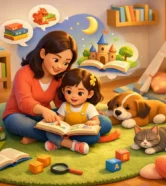



A child may talk easily about a dragon who is worried, then go quiet when asked about their own worry. That distance can be useful. In therapy, at school, or during a hard moment at home, a story gives children a safer way to look at a feeling before they are ready to speak about it directly. Custom books for therapy settings can make that bridge even more familiar by placing the child, their real world, and their trusted people at the center of the story.
For Maple-Kids, this topic sits within Behavior & Emotional Growth: Big Feelings. It is especially meaningful for children roughly ages 3 to 8 who are learning to recognize strong emotions, recover after upset, or find words for experiences that feel too large to explain. A personalized book is not therapy or a replacement for professional care. It can, however, support the work already happening by creating shared language, offering gentle rehearsal, and helping adults continue a helpful conversation between sessions.
Why big feelings need a child-sized story
Big feelings are not misbehavior by default. Anger can arrive when something feels unfair. Worry may show up before a new place, a separation, or an unfamiliar task. Sadness, disappointment, jealousy, and frustration can all be difficult to carry when a child does not yet have the words, perspective, or regulation skills to make sense of them.
Adults often want to solve the moment quickly. Children usually need connection first: someone who notices, accepts that the feeling is real, and helps them find one manageable next step. A story slows that process down. It shows a feeling beginning, growing, and changing without asking a child to perform calmness on demand.
When the main character looks like the child and lives in a recognizable world, the story can feel less like a lesson delivered from above. It becomes a small, repeatable experience: “This happens to me. I am not bad for feeling this. I can ask for help, take a pause, or try again.”
How custom books for therapy settings support continuity
A therapist may use play, drawings, emotion cards, role-play, or stories to help a child communicate. Caregivers and educators may be looking for a simple way to carry those ideas into ordinary routines. A custom book can provide a consistent, low-pressure reference point across those settings.
The value is not in making every page instructional. In fact, a story works best when it stays emotionally honest. The character might feel their cheeks get hot after losing a game, want to hide before a classroom presentation, or become overwhelmed when plans change. The story can name body clues, show a caring adult nearby, and gently introduce one or two coping choices. It should not suggest that a feeling disappears simply because the child used a strategy once.
Repetition matters. Reading the same story before bed, in a waiting room, or after a difficult day lets children encounter the language when they are calm. Later, an adult might say, “This feels a little like the part when you needed your quiet corner,” rather than launching into a long explanation in the middle of distress.
This approach depends on the child and the therapeutic goal. Some children enjoy direct stories about anger or worry. Others may respond better to an animal companion, a magical weather system, or an adventure that represents the feeling indirectly. The right level of detail should be guided by the child’s age, comfort, and the adults who know them well.
A Maple-Kids book concept: Maya and the Thundercloud Day
Imagine a personalized Maple-Kids story called Maya and the Thundercloud Day. Maya is a five-year-old who sometimes feels overwhelmed when play does not go as expected. In the book, a small gray thundercloud follows her as she gets ready for preschool, tries to build a block tower, and hears that it is time to clean up before she is finished.
The cloud is not portrayed as something naughty that Maya must get rid of. It is a signal that her body needs support. Maya notices her tight hands and fast feet. Her teacher, shown with a consistent illustrated likeness, reminds her of the “pause place” they practiced together: feet on the floor, one hand on her tummy, and a choice to ask for help or take three slow breaths.
The details make the story unmistakably Maya’s. Her favorite yellow rain boots appear by the door. Her grandparent can be included at pickup. Her dog waits at home. The family can choose language that sounds natural in their household, including a second language or familiar words for calming down. If a child is in a blended family, has two homes, uses mobility supports, or has a care team they trust, those realities can be represented respectfully rather than edited out.
By the final pages, Maya does not become perfectly calm forever. She tells her parent, “My thundercloud came back today, but I knew what to do first.” That ending makes room for practice. It honors progress without demanding perfection.
Personalization does more than add a name
Children notice when a book truly belongs to them. A name on the cover can be delightful, but meaningful personalization goes further. It reflects the places, relationships, sensory preferences, interests, and everyday moments that shape a child’s experience.
High-quality illustrations help make those details readable before a child can follow every word. A familiar bedroom, a favorite stuffed animal, or a caregiver’s comforting expression gives the story emotional anchors. Consistent character design also matters. When the child sees the same illustrated version of themselves from page to page, they can follow the emotional journey more easily: here I was tense, here someone understood, here I practiced a next step.
For therapy-related use, thoughtful personalization also means restraint. A book does not need to include every difficult event or private detail. Sometimes a lighter fictional frame is safer and more useful. Families and professionals can decide whether the story should closely reflect a specific challenge or create enough imaginative distance for the child to engage comfortably.
Making the story useful beyond reading time
A personalized book works best as an invitation, not a script children must repeat correctly. Read it when the child is settled and receptive. Pause at an illustration and wonder aloud: “What do you think Maya’s body is telling her?” If the child wants to change the subject, that is information too. Let the book remain a safe place rather than a test.
Choose one story phrase that can travel into daily life. It might be “My thundercloud is getting loud,” “I need a pause,” or “Can you stay close?” Simple phrases are easier to remember when emotions rise. If a therapist has introduced language or a regulation tool, caregivers can ask whether a similar phrase belongs in the story so the child hears a consistent message.
It can also help to notice effort rather than judge outcomes. “You told me your cloud was loud” recognizes awareness. “You came back after your break” recognizes recovery. Those small observations can build confidence and make future practice feel possible.
A respectful tool for the adults around a child
For caregivers, a custom story can reduce the pressure to find perfect words in a charged moment. For educators and child-development professionals, it can offer a gentle way to begin a conversation without assuming that every child experiences feelings in the same way. For grandparents and other trusted adults, it can show the language and routines that help the child feel understood.
Privacy matters in therapy settings. Families should decide who sees the book and what personal information belongs in it. A story can be deeply personal without becoming a record of a child’s private struggles. The goal is dignity, connection, and a tool the child feels proud to open.
A thoughtfully made Maple-Kids story can give a child a familiar companion for the moments when feelings are hard to explain. Page by page, it can remind them that big feelings are welcome, help is available, and one small next step is enough for today.