

Category: Behavior & Emotional Growth | Topic: School & Learning | Intended age range: 3-8 | Parent need: building reading confidence and interest | Developmental value: language, attention, comprehension, and school confidence | Personalization opportunity: the child’s identity, family, interests, and daily reading moments | Book concept: The Day Maya Found the Missing Story
A child who happily listens to a book about dragons may suddenly lose interest when it is time to practice reading a few simple words. They may wiggle, say they are tired, or insist that they cannot do it. That does not mean they dislike books. Often, reading can feel like a big task before it feels like a pleasure.
So, can personalized stories aid reading? They can support it by giving children a reason to return to the page. When the main character has their name, familiar face, favorite pet, and a problem that feels close to home, the story is no longer just something to get through. It becomes a place where they belong.
Why reading can feel personal before it feels academic
Early reading asks children to do many things at once. They are noticing print, remembering sounds, following a story, looking at pictures, and sometimes managing the worry of getting a word wrong. For a child who is new to these demands, a book about an unfamiliar character in an unfamiliar setting can require extra effort before the story even begins.
A personalized story reduces some of that distance. A child may already know the bedroom in the illustration, the dog curled beside the bed, or the grandmother who appears at the library. That familiarity creates an easier entry point for conversation. Instead of beginning with, “What does this word say?” an adult can begin with, “Look, your backpack is by the door. Where do you think you are going next?”
This is not a shortcut around learning to read. Children still need rich read-aloud experiences, chances to play with language, and instruction that matches their stage of development. But a story made for them can make repeated reading feel more inviting, and repetition is often where confidence grows.
How personalized stories can support reading motivation
Children are more likely to stay with a story when they care about what happens next. In a thoughtfully personalized book, the stakes can be small, meaningful, and age-appropriate: finding a missing library book, helping a new classmate, following clues left by a beloved pet, or gathering courage to read a sign aloud on a family outing.
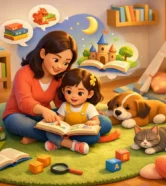
For example, The Day Maya Found the Missing Story could follow a child named Maya as she visits her school library with her dad and her stuffed rabbit, Juniper. A favorite book has slipped behind a shelf, and Maya follows picture clues, labels, and simple signs to find it. The story can include Maya’s real interests, perhaps space stickers on her backpack or a love of dinosaurs, while gently showing her noticing letters and asking for help when she needs it.
The goal is not to make a child perform perfectly on every page. It is to show them as a capable participant in a story. They see themselves wondering, trying, listening, and taking one manageable next step. For children who say, “I’m not good at reading,” that representation can create more encouraging shared language: “You kept looking, just like Maya did,” or “Let’s try one clue together.”
Familiar details help children talk about the story
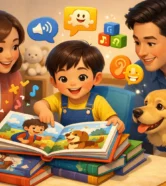
Reading is more than saying words aloud. Children also build understanding by predicting, explaining, remembering, and connecting a story to their own lives. Personalization gives adults natural material for those conversations.
If a book includes a child’s pet, an older sibling, two moms, grandparents, a caregiver, or a meaningful family tradition, children have something concrete to notice and discuss. A multilingual family might include familiar words from home alongside clear English storytelling, with the language presented naturally and respectfully. A child who has recently started preschool might recognize the cubby, the bus stop, or the first-day nerves shown in the illustrations.
These details should serve the story, not sit in it like decorations. When the child’s family, culture, memories, and questions shape the adventure, the book can feel intentionally made rather than like a generic tale with a name added at the end.
High-quality illustrations matter here. Clear visual storytelling helps young children follow action, understand emotion, and revisit details they missed before. Consistent illustrations of the child’s character also help them recognize that they are the same brave explorer from one scene to the next, even when the setting changes from home to school to the library.
Can personalized stories aid reading at different stages?
Yes, but the kind of support changes with the child’s age and reading experience.
For preschoolers, the value may be in enjoying the rhythm of a repeated phrase, pointing to familiar objects, and retelling what happened. A child might “read” the story from the pictures long before they can decode the printed words. That is meaningful engagement, not pretending.
For beginning readers, a personalized book can be a comforting choice for reading aloud together. Because the plot and pictures are familiar, children can spend more attention on a short repeated sentence or a known word. An adult can pause without pressure, offer a clue, and keep the experience warm: “The first sound is mmm. What word might make sense here?”
For children who are already reading independently, personalization can still matter. A story that reflects their interests – soccer, robots, ocean animals, baking, a family trip, or a big question they keep asking – may encourage longer attention and richer discussion. At this stage, the story can include more detailed vocabulary and a slightly more layered mystery or challenge.
It depends on the child. Some children will be most drawn to seeing themselves in the pictures. Others may care more about solving the problem, laughing at a silly moment, or reading alongside a trusted adult. The best story meets the child where they are rather than asking them to become someone else first.
Make the book part of a low-pressure reading routine
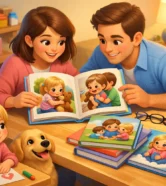
A personalized book works best as one part of a relaxed reading life, not as a test. Choose a predictable moment, such as after dinner, before bed, or while waiting for an appointment. Let the child hold the book, turn pages, point out details, or decide which scene to revisit.
Try reading the same book several times over a week. On the first read, focus on enjoyment. On the next, invite the child to finish a familiar line or spot something in the illustration. Later, ask one simple question: “Why do you think you chose to ask for help?” Keeping the questions light protects the pleasure of the story.
When a child hesitates, validate the feeling before offering guidance. “That word looks tricky” can feel very different from “You know this.” Then make the next step small. Read the sentence together, cover part of the word, or let the child use the picture for a clue. The point is connection and practice, not getting every word right.
A story children can return to
Children often ask for the same story again because they enjoy knowing what comes next. In personalized storytelling, that return can be especially powerful. Each reread lets them notice a new detail, use a familiar phrase with more confidence, or talk about a feeling the character had in a way that feels safe.
A carefully created MapleKids story can place a child at the center of that experience: their illustrated likeness remains consistent across the pages, their family and interests have a real role in the plot, and the language and challenge can suit their age. Whether the child is building early school confidence or simply learning to love time with books, a story that feels like theirs can make reading together feel less like a requirement and more like a shared place to grow.