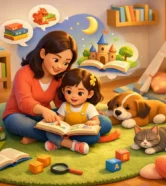



A child can tell when a book was not made with someone like them in mind. Sometimes it is the missing detail: no character shares their skin tone, family structure, language, mobility aid, or quiet way of moving through the world. Sometimes it is the role they are given – always the sidekick, never the one who solves the problem. That is why representation matters in storybooks: children are not only learning to read the words. They are learning who gets to belong, be brave, feel afraid, and become the hero.
For parents and caregivers, this can feel like a big responsibility. It does not have to mean finding one perfect book that carries every part of a child’s identity. It means building a reading life where children regularly encounter stories that reflect their reality and invite them to understand lives beyond their own.
Why Representation Matters in Storybooks for Children
Representation gives children a mirror and a window. A mirror lets them recognize something true about themselves. A window lets them look with care into someone else’s experience. Children need both, and the balance matters.
When a child sees a character with a family that looks like theirs, hears a familiar name, or notices a feeling they have struggled to explain, the story can offer a quiet but powerful message: You are not strange. You are not alone. Your life belongs in a story. That recognition can strengthen a child’s sense of belonging before they have the language to describe why it matters.
This is especially meaningful during the years when children are forming early ideas about identity. They are noticing differences in appearance, culture, ability, family routines, and social expectations. Books help shape the stories they tell themselves about those differences. When the pages repeatedly center only a narrow range of children and families, some young readers may begin to see their own experience as less visible or less valued.
Representation is not only about what a character looks like. It includes the full texture of a child’s life: blended families, adoptive families, single-parent homes, grandparents as caregivers, multilingual homes, faith traditions, neurodiversity, disability, gender expression, big feelings, and everyday routines. A child can feel seen in the smallest specifics, such as a familiar meal at the table or a parent using the same comforting words at bedtime.
Seeing yourself supports confidence
Children often borrow confidence from the characters they love. When a character who feels recognizable faces a problem, makes a mistake, asks for help, and keeps going, a child can begin to imagine doing the same.
This does not mean every story must be cheerful or turn a child into a superhero. In fact, honest stories are often more helpful when they make room for worry, jealousy, shyness, grief, or uncertainty. Representation becomes meaningful when children see that someone like them can have hard feelings and still be worthy of patience, connection, and growth.
A child who is nervous about starting school may connect with a character who needs extra time to join the group. A child adjusting to a new sibling may feel relief when a story names the mixed feelings that can come with change. The goal is not to erase difficult emotions. It is to help children see emotions as understandable and manageable.
Familiar stories create openings for conversation
A well-chosen story can make emotional conversations feel less direct and less intimidating. Instead of asking, “Are you worried about moving?” a caregiver can ask, “Why do you think the character wanted to stay home?” The child may talk about the character first. Often, that is the safest path toward sharing something personal.
This is one reason personalized storytelling can be so supportive. When a child’s name, appearance, family context, or real-life challenge is thoughtfully included, the distance between the page and the child’s world becomes smaller. The story is not a substitute for listening, professional support, or a difficult family conversation. It can, however, become a gentle starting point for all three.
Representation Builds Empathy, Not Just Self-Esteem
It is tempting to frame representation as something needed only by children from underrepresented communities. Every child benefits from it.
Books that reflect many kinds of people and families help children understand that there is no single “normal” way to live, communicate, celebrate, learn, or love. That understanding can make room for empathy long before children encounter every difference in their own classroom or neighborhood.
The quality of representation matters here. A character should not exist only to teach a lesson, carry a label, or overcome hardship for someone else’s inspiration. Children deserve to see characters with interests, humor, agency, friendships, and ordinary days. A child who uses a wheelchair can also be the clever scientist in the story. A bilingual child can be the one planning the adventure. A character with anxiety can be funny, capable, and loved without being defined by fear.
For caregivers, the most meaningful books often leave room for curiosity rather than delivering a lecture. After reading, simple questions can help: “What did you notice about that family?” “What was the character proud of?” “What would make them feel welcome?” These questions teach children to pay attention with respect.
What Meaningful Representation Looks Like
Not every diverse-looking bookshelf offers meaningful representation. A book can include a wide range of characters and still rely on stereotypes, token appearances, or stories that flatten a child’s identity into one trait.
Look for stories where children have agency. They should make choices, contribute ideas, and have relationships that feel warm and believable. Look for details that feel lived-in rather than decorative. Culture, family, and identity should shape the story naturally, not appear only as a costume, holiday, or obstacle.
It also helps to notice whose feelings are treated as important. Are some characters allowed to be complicated while others are only helpful, sad, or “brave”? Are differences presented as problems to fix, or as ordinary parts of human life? A thoughtful book does not pretend that bias, exclusion, or misunderstanding never happen. It simply refuses to make a child’s identity the problem.
Personalization should feel respectful, not automatic
Personalized books can make representation especially immediate, but care matters. Adding a child’s photo or name is only the beginning. The story should honor the information a family shares and avoid assumptions about culture, ability, gender, or family roles.
The most supportive personalized stories are guided by real context: what makes a child laugh, who helps them feel safe, what transition they are facing, and what encouragement they need to hear. At MapleKids, personalization is designed to serve that deeper purpose – helping children recognize themselves as capable, cared for participants in their own story.
Privacy matters, too. Families should feel clear about what details are being collected, how they are used, and what boundaries protect a child’s information. Technology can help create more responsive stories, but it should remain in service of trust, imagination, and human connection.
Building a Bookshelf That Makes Room for Every Child
A representative bookshelf is not a one-time project. Children grow, their questions change, and the stories that resonate at age four may feel different at age seven. Aim for variety over perfection.
Include books that reflect your child closely, along with books that widen their view of the world. Choose stories about joy, adventure, friendship, and silly everyday mishaps, not only stories about struggle or identity-based conflict. If a book introduces an experience unfamiliar to your family, read it with openness instead of treating it as a lesson to complete.
It also helps to revisit beloved books. Children notice new details each time, especially when their own lives are changing. A story that once felt like a fun bedtime read may later become the book that helps a child name loneliness, courage, or pride.
Representation will not solve every challenge a child faces. A single story cannot carry the full weight of confidence, belonging, or emotional healing. But when children repeatedly meet characters who reflect the richness of real life, books can become a steady reassurance: there is room for you here, and there is room for others, too.
At bedtime, in a classroom reading circle, or during a hard transition, that reassurance can travel far beyond the final page.