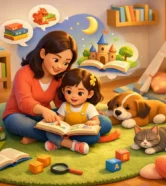



Some children show their anxiety clearly. They cry, cling, ask repeated questions, or say they do not want to go.
Other children carry anxiety more quietly.
They may feel nervous at bedtime. They may feel worried before school. They may sit silently in the car on the way to a birthday party, already thinking about everything that could go wrong. They may freeze when they have to try something new.
For parents, it can be hard to know what to say in those moments.
You want to comfort your child, but you do not want to dismis their feelings. You want to help them feel brave, but you do not want to pressure them. You want them to know they are safe, but sometimes the words just do not land.
That is where personalized storybooks can be helpful.
When a child sees their own name inside a story, they pay attention in a different way. When they see their family, their fears, and their everyday world reflected in the pages, something softens. They feel understood.
And for an anxious child, feeling understood can mean everything.
Why Personalized Books Feel Different
There are many children’s books about worry, fear, and big feelings. Some of them are beautiful and helpful.
But anxiety is personal.
One child may be afraid of being away from their family. Another may worry about making mistakes. Another may feel overwhelmed by loud places, new people, or changes in routine.
A regular story can help a child understand anxiety in a general way. A personalized story can go one step further. It can speak directly to the child’s own world.
When a book includes a child’s name, family routines or real worries, it sends a quiet but powerful message:
“Your feelings make sense.”
“You are not the only one who feels this way.”
“You are safe.”
“You can get through this.”
That message can feel deeply comforting.
Instead of feeling like they are being taught a lesson, the child feels like the story is walking beside them.
This is especially important for anxious children. Many anxious kids are already on high alert. They are always scanning for what might go wrong. If an adult talks too directly about their anxiety, they may shut down, argue, or say they are fine.
A story can be a softer way in.
And a personalized story can be even softer.
What Anxious Kids Need From a Story
Anxious children do not always need someone to promise that everything will be perfect.
They need to feel that they can handle hard moments. They need to feel connected to the people who love them. They need to feel prepared, supported, and safe.
A good story for an anxious child does a few important things.
First, it helps the child feel seen.
When a story gently describes a worry that feels familiar, the child may think, “That is like me.” This can help them feel less alone. It also helps them understand that their worries are part of their experience, not the whole of who they are.
Second, it gives the child a chance to practice bravery in their imagination.
Before a child can do something brave in real life, it can help to picture it first. A story might show them taking a deep breath, asking for help, trying again, or staying close to a trusted grown-up while facing something difficult.
Third, it brings the child back to connection.
Anxiety can make chidren feel alone, even when they are surrounded by people who care. Reading a story together can remind them that they are not facing their feelings by themselves.
They are sitting with someone safe.
They are hearing familiar words.
They are entering a story where they are loved.
That combination of closeness, repetition, and reassurance can be very powerful.
How Personalized Stories Support Growth
The strength of a personalized story is that it feels relevant.
It can meet the child exactly where they are struggling.
If a child is afraid to sleep alone, the story can gently explore bedtime. If a child feels nervous about school, the story can take place in a classroom. If a child worries about being different, the story can help them see their uniqueness with warmth and pride.
This does not mean a book replaces a parent, teacher, doctor, or therapist.
It does not.
But a book can become one helpful tool. It can become something a family reads before bed. It can become a gentle way to start a conversation. It can become a familiar comfort during a stressful season.
For anxious children, repetition matters. Reading the same story again and again can help them feel more prepared. They already know what happens. They know the child in the story feels worried tries something small, receives support, and gets through the moment.
Over time, that message can begin to feel believable.
An anxious child may start to think of themselves only as “the worried one.” A ppersonalized story can help them see something bigger.
They are not just anxious.
They are thoughtful.
They are sensitive.
They are loved.
They are capable.
They are learning.
That shift matters.
Not All Personalized Books Are the Same
A book is not automatically helpful just because it includes a child’s name.
For anxious children, the story needs to be handled with care.
If the story is too cheerful, it may not feel real. If it is too intense, it may make the child more worried. If it feels like a lecture, the child may lose interest or feel misunderstood.
The best personalized stories are emotionally thoughtful. They respect the child’s fear without making the fear bigger than it needs to be.
They use gentle language.
They move at a calm pace.
They give the child hope without rushing them.
They show bravery in small, realistic steps.
A helpful story does not say, “There is nothing to be scared of.”
It says, “This feels scary, and you are not alone.”
That is a very different message.
When a Personalized Book Can Be Especially Helpful
Some children may benefit from reading these stories often. Others may need them during certain moments or transitions.
A personalized story can be especially helpful when a child is:
Starting school
Having trouble sleeping alone
Going to the doctor
Moving to a new home
Adjusting to a new sibling
Struggling with separation anxiety
Feeling nervous in social situations
Dealing with change
Trying something new
During these moments, children need reassurance they can return to. A story gives them something familiar to hold onto.
It can also help when a child does not want to talk directly about their feelings.
Some children will not answer questions like, “What are you worried about?” But they may point to a picture in a story and say, “That is me.” Or they may ask to read the same page again.
That can be the beginning of a conversation.
And sometimes, that beginning is enough.
Of course, it is important to be realistic. If a child’s anxiety is intense, ongoing, or affecting daily life in a serious way, they may need additional support from a qualified professional. A personalized book can help, but it should not be the only support when a child is struggling deeply.
What to Look For in a Personalized Book for Anxiety
If you are choosing a personalized book for an anxious child, look beyond the cute details.
Ask whether the story will truly support the child emotionally.
A good personalized book should:
Reflect the child’s real challenge with care
Make the child feel safe, not pressured
Avoid minimizing their fear
Show small, realistic coping steps
Include warmth and reassurance
Be gentle enough to read again and again
It should not try to force bravery. It should not make the child feel like their fear is silly. And it should not rush them toward a perfect ending.
Anxious children often find comfort in routine. A book that can be read many times can become part of that routine. The familiar words, familiar rhythm, and familiar ending can help the child feel grounded.
The Power of Feeling Recognized
Children do not always need big explanations.
Sometimes, they simply need to feel understood.
An anxious child is often looking for what might go wrong. A personalized story can interrupt that pattern, even for a few minutes. It can gently remind them that they are safe, loved, and not alone.
That may sound simple, but for a child who feels overwhelmed, it can mean a lot.
A story cannot remove every worry. But it can create a small safe place where the child feels seen.
And from that place, they may find the courage to take one small step forward.