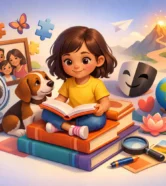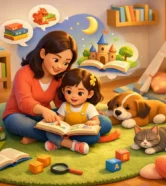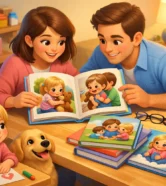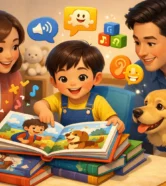



A child has had a hard day. Maybe the block tower fell, a sibling said no, or it was time to leave the playground before they were ready. Later, they ask for a story – not a lecture, not a solution, just a story. That quiet moment is where an AI book makers for kids review becomes more than a question about technology. Parents are really asking: can this book help my child feel seen, understood, and a little more ready for tomorrow?
For this review, the focus is Behavior & Emotional Growth: Big Feelings for children roughly ages 3 to 8. The parent need is clear: a gentle, practical way to help a child recognize strong emotions and practice small responses without shame. A well-made personalized story can support that work by letting children see a familiar version of themselves move through a hard moment with care.
What Parents Should Look for in AI Book Makers for Kids
Not every AI-created children’s book offers the same experience. Some tools are built mainly to produce a quick novelty gift: a child’s name appears in a prewritten adventure, while the rest of the story stays largely the same. That can still be fun, especially for a birthday or a child who enjoys seeing their name in print. But when a family wants a story connected to real feelings or real routines, a name alone may not be enough.
The most meaningful options treat personalization as part of the story itself. They ask about the child’s age, interests, family life, favorite comfort items, pets, language, or the situation they are working through. Those details should influence the setting, the illustrations, the emotional challenge, and the small step the character practices.
For a big-feelings story, that might mean a child who loves construction vehicles becomes the helper at a busy building site after a plan changes. Or a child who feels safest with their grandmother might have her appear as a calm, reassuring presence. The goal is not to make every hard feeling disappear. It is to create shared language around what happened and show one manageable next step.
Personalization should feel specific, not pasted in
A good test is simple: remove the child’s name from the manuscript. Would the story still describe their world, interests, and experience? If the answer is yes, the personalization is probably meaningful.
Look for stories that make room for details such as a child’s illustrated likeness, familiar family members, a beloved pet, a cultural tradition, or a phrase used at home. Consistent characters matter, too. When a child looks like the same child from page to page, with recognizable caregivers and surroundings, the story is easier to enter emotionally.
High-quality illustrations are not just decoration. For young readers, pictures often carry the feeling of the scene before the text does. A worried face, clenched hands, a cozy reading corner, or a caregiver kneeling nearby can help a child identify what is happening without needing a long explanation.
The story needs a real emotional arc
Children’s books about behavior can become unhelpful when they rush straight to the lesson. A child who is upset does not need a character who is perfectly calm by the next page. They need to see that frustration, disappointment, jealousy, worry, or anger can be named and held with care.
In a thoughtful story, the child character has a reason for their feeling. Something mattered to them. Perhaps they wanted one more turn, their drawing did not come out as planned, or a game felt unfair. The story validates that feeling first, then gently introduces a choice: pause with a grown-up, use words, find a quiet space, take a breath, or try again when ready.
This is where age-appropriate writing matters. Preschoolers often benefit from simple repeated phrases and concrete actions. Early elementary children may be ready for more nuance, such as noticing body clues or understanding that two people can want different things at the same time. The best book makers adjust the language, pacing, and resolution to the child rather than giving every age the same script.
A Big Feelings Book Concept That Feels Truly Personal
Imagine a personalized book called Maya and the Roaring Red Balloon. Maya is preparing for a neighborhood celebration with her dad, two moms, and her rescue dog, Pepper. She has been chosen to carry a bright red balloon at the front of the parade. On the way there, the balloon slips loose and floats beyond reach.
Maya’s anger arrives like a roar in her chest. The illustration does not make her look naughty or unreasonable. It shows the moment honestly: her shoulders tight, her eyes wet, Pepper close beside her, and her family giving her space while staying near.
Instead of insisting that Maya cheer up, her dad says, “That balloon mattered to you.” Maya puts words to what happened: “I am mad because I was trying so hard.” Her family helps her choose a small next step. She presses her feet into the sidewalk, holds Pepper’s leash with both hands, and decides whether she wants a hug, a quiet minute, or help choosing another role in the parade.
By the end, Maya still wishes she had the balloon. The story does not pretend otherwise. But she discovers that a hard feeling can move through her when she has support, words, and time. She walks in the parade carrying a small banner she designed herself.
That is a more useful emotional message than “don’t get upset.” It tells a child: your feelings make sense, and you can practice what to do when they feel very big.
A book like this can be adapted in many ways. The parade can become a birthday party, a school performance, a family gathering, or a familiar local tradition. Maya can become any child, in the language they hear at home, with caregivers and family structures that reflect their life. If a child is especially interested in space, dinosaurs, dance, or trains, the central metaphor can shift without losing the emotional purpose.
The Trade-Offs to Consider Before Ordering
AI can make personalized storytelling more accessible and flexible, but it does not automatically make a book thoughtful. Families should still review the information they share, the final story details, and the way emotions are portrayed.
Be careful with platforms that promise a finished book from only a name and a photo if your goal is deeper support. Speed can be helpful for a last-minute gift, but meaningful stories usually require a few more choices: what happened, what comforts the child, who belongs in their world, and what small skill they are practicing.
It also helps to avoid stories that frame a child as a problem to be fixed. A book about yelling, refusing, or melting down should not label the child as bad. It can show the challenge clearly while keeping the child capable, loved, and able to learn.
Privacy deserves attention as well, particularly when uploading photos or family information. Before creating a book, parents may want to understand what details are required and choose only the information that feels appropriate to share. An illustrated likeness can be wonderfully personal, but a family should always remain comfortable with the process.
How to Use a Personalized Book Beyond Story Time
A big-feelings book works best when it is not treated as a one-time lesson. Read it during a calm moment, not in the middle of a meltdown. Let your child point to the character’s face, predict what might help, or choose the part they want to hear again.
Afterward, connect one line from the book to everyday life. You might say, “Your body looks like Maya’s body when the balloon flew away. Would you like a quiet minute or help finding words?” This creates shared language without demanding that a child perform the story’s ending on command.
Keep the practice small. If the book introduces asking for space, try that one phrase for a week. If it shows a child telling a grown-up, “I am disappointed,” model that language yourself. Repetition can help a story become familiar enough to use when real emotions show up.
A Human-Centered Standard for Personalized Stories
The strongest AI book makers for kids do not replace connection between children and caring adults. They give families another way to begin it. The technology should stay in the background while the child’s voice, experience, and imagination lead.
Maple-Kids creates personalized stories with that purpose in mind: a child can recognize themselves in the pages, see a difficult moment handled with warmth, and return to the story whenever they need a familiar place to practice. A carefully made book will not solve every big feeling, but it can offer something deeply valuable – a child-sized reminder that they are understood, supported, and still growing.