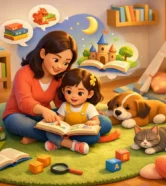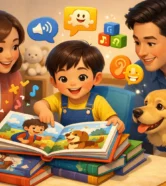



Some books get read once and then placed back on the shelf.
Others become part of family life.
They are the books you reach for after a dificult preschool drop-off, a bedtime meltdown, or one of those tearful moments when your child feels something too big to explain.
That is why books to help kids with big feelings can matter so much.
The right story can help a child feel seen. It can calm their body. It can give shape to an emotion that feels overwhelming. And sometimes, it can say what a child is not yet able to say for themselves.
For young children, big feelings are not occasional. They are part of everyday life.
Anger might show up because the blue cup is in the sink. Worry might appear right before school. Sadness might come after a move, a new sibling, or a change in routine that adults barely notice.
Books give children a safe place to understand those feelings from a little distance. They can watch a character struggle, ask for help, calm down, and try again.
But a helpful feelings book does more than simply mention emotions.
The best ones are gentle and developmentally kind. They do not shame children for being upset. They do not rush straight to a lesson. They give emotions a shape, a rhythm, and a way forward.
What to Look For in Books to Help Kids With Big Feelings
When parents look for emotional learning books, it is easy to focus only on the message.
But children notice more than the lesson at the end.
They notice the tone.
They notice the pictures.
They notice the character’s face.
They notice whether the problem feels familiar.
They notice whether the story feels safe.
A strong feelings book usually does three things well.
First, it names emotions insimple language.
Second, it shows what those feelings can look and feel like in the body.
Third, it offers comfort or coping without pretending that every hard moment disappears instantly.
That last part matters.
Children need reassurance, but they also need honesty. A story that says, “Big feelings happen, and you can move through them with support,” is much more helpful than one that makes emotions disappear too quickly.
It also helps when a book leaves room for conversation.
A story that invites questions like, “Have you ever felt like that?” or “What helped the character?” can stay useful for a long time.
Representation matters too. Children connect more deeply when they recognize parts of their own family, routines, culture, or identity in the story. For multicultural families, educators, and therapists, that sense of recognition can make the emotional message feel much closer.
12 Books to Help Kids With Big Feelings
1. The Color Monster by Anna Llenas
The Color Monster is a great choice for younger children because it makes emotions visual.
Feelings become colors and textures, which can help children understand something that might otherwise feel too abstract.
If a child says, “I feel yellow today,” that is progress. They are finding a way to describe what is happening inside them.
This book can be especially helpful for children who struggle to sort one feeling from another.
The only thing to keep in mind is that some children may need help understanding that emotions are not always just one color or one feeling. Sometimes feelings are layered. And that is okay too.
2. In My Heart by Jo Witek
In My Heart is a warm and gentle book about the many feelings a child can have.
It works beautifully because the language is simple without feeling empty. The heart imagery gives children a way to imagine emotions as something they can notice and talk about, instead of something they need to fear.
This is a lovely choice for todlers through early elementary children.
It is especially helpful if you want a book that opens up conversation without focusing on a major conflict or problem.
3. The Rabbit Listened by Cori Doerrfeld
Few books show emotional support as softly as The Rabbit Listened.
In the story, a child faces disappointment. Different animals come along and try to fix it, explain it, distract from it, or rush past it.
But the rabbit simply stays close and listens.
That is what makes this book so powerful.
It is helpful for children, but honestly, it is also a beautiful reminder for adults. Some times children do not need us to fix the feeling right away. Sometimes they need us to sit beside them while the feeling passes through.
This book can be especially comforting during grief, frustration, disappointment, or big changes.
4. When Sophie Gets Angry — Really, Really Angry by Molly Bang
Anger is one of the big feelings parents often need the most help with.
It can be loud. It can be physical. It can build quickly. And once it takes over, it can be hard for a child to find their way back.
This book does not pretend anger is pretty. It shows the intensity of anger clearly, and then it offers a believable path back to calm.
That honesty is what makes it useful.
Children who feel ashamed after angry moments may feel relieved to see anger shown without judgment. The story helps them understand that anger can be big, but it does not have to last forever.
5. A Little Spot of Emotion Series by Diane Alber
The A Little Spot of Emotion books are popular in classrooms and therapy settings because they are clear, concrete, and easy for children to understand.
Each emotion is shown as a little character, which can make feelings easier to talk about.
For children who benefit from visual structure, this can be vvery helpful.
The style is more instructional than story-like, so it depends on your child. Some children love the directness. Others may prefer books with a stronger narrative. These can work well alongside more imaginative stories.
6. The Way I Feel by Janan Cain
The Way I Feel is useful for helping children build a wider emotional vocabulary.
Many children know words like happy, sad, and mad. But they may not yet know words like frustrated, disappointed, shy, proud, or jealous.
This book helps expand that language.
It may not be the calmest bedtime book, but it is very practical for home, school, or therapy settings.
Sometimes simply naming the feeling is the first step toward handling it.
7. Grumpy Monkey by Suzanne Lang
Some children do not like being told to cheer up.
Honestly, many adults do not either.
Grumpy Monkey understands that. Jim Panzee is clearly having a bad day, and the story gently shows that unpleasant feelings do not always need to be fixed immediately.
For sensitive, strong-willed, or easily overwhelmed children, this can feel very validating.
It also gives parents a helpful reminder: sometimesvalidation works better than correction, especially when emotions are still hot.
8. Breathe Like a Bear by Kira Willey
Not every helpful book needs a full story.
Breathe Like a Bear offers short breathing and mindfulness exercises made for children. It can be especially useful during transitions, bedtime, quiet time, or after a meltdown.
The key is to practice these exercises when your child is calm first.
If breathing is introduced only when a child is already overwelmed, they may reject it. But when it becomes familiar during calm moments, it can be easier to use when big feelings show up.
9. Today I Feel Silly by Jamie Lee Curtis
Today I Feel Silly is playful energetic, and light.
It helps children understand that feelings can change quickly throughout the day. A child can feel silly, grumpy, excited, sad, or proud, and none of those feelings are wrong.
This book is a nice choice when you want to tallk about emotions without making the conversation feel heavy.
It normalizes the ups and downs of childhood in a fun and approachable way.
10. Listening to My Body by Gabi Garcia
Some children feel emotions in their bodies before they can explain them.
A tight chest
A fast heartbeat.
A stomachache.
Clenched fists.
A hot face.
Listening to My Body helps children connect body sensations with emotional awareness.
This can be especially useful for anxious children or for children learning self-regulation skills.
It teaches a simple but important idea: the body often gives clues about feelings before words arrive.
11. Anh’s Anger by Gail Silver
Anh’s Anger takes a quieter and more reflective approach to anger.
Instead of only naming the feeling, it gives the child space to sit with anger and understand it. The paciing is calm and thougtful, which may work well for children who enjoy softer stories.
This book can also be helpful for families who want to introduce mindfulness through storytelling rather than direct instruction.
It shows that anger is not something to push away imediately. It is something we can notice, understand, and move through.
12. A Personalized Story That Reflects Your Child
Sometimes the most helpful emotional suport book is the one where your child sees their own name, family, worries, and strengths reflected back to them.
This can be especially meaningful when a child is facing a specific challenge, such as:
Separation anxiety
Moving homes
Grief
Jealousy
A new sibling
Sensory overwhelm
School worries
Feeling diferent
Trouble belonging
A personalized story can meet a child in a way a general book sometimes cannot.
Instead of asking the child to learn from someone else’s life it lets them practice courage, comfort, and emotional language inside a story built around their own world.
For many families, that makes the message easier to remember.
Thoughtfully created personalized books, including those from Maple Kids, can become a meaningful part of a child’s emotional support toolkit. They make the child the hero of a story that feels true to their life, not just a character in a lesson.
How to Use Books About Big Feelings at Home
Books often work best before the hard moment, not only during it.
A child who already knows a story about anger, worry, sadness, or jealousy has something familiar to return to when those feelings appear in real life.
That familiarity can make emotional language easier to access.
It also helps to keep the conversation simple.
You do not need a full lesson plan. One or two gentle questions are usually enough.
You might ask:
“Which part felt like you?”
“What do you think helped the character?”
“Have you ever felt that way?”
“What would you want someone to do for you in that moment?”
If your child does not want to answer, that is okay.
Some children need time. Some listen quietly and make the connection later. Some point to a picture instead of using words. All of that counts.
If your child refuses the book during a meltdown, that does not mean the book failed.
Timing matters.
A child in the middle of a big feeling may need closeness, quiet, movement, or rest before they are ready for words. The book can come later, when their body is calmer.
For teachers and therapists, books can also become shared emotional reference points. After reading a story, you can gently refer back to the character during real moments.
That kind of bridge helps children apply what they heard in everyday life.
The Book Is Not the Whole Tool
A good feelings book can do a lot, but it cannot replace relationship.
Children learn emotional safety through repeated experiences of being understood, comforted and guided. Stories support that process because they give families a shared language and a softer way to enter hard topics.
The best books do not teach children to stop feeling so much.
They teach children that feelings can be named.
Feelings can be held.
Feelings can be moved through with support.
For a child, that is a powerful message.
For a parent, it is also a reminder that you do not need perfect words every time.
Sometimes reading together is the words.
If you are choosing books for a child with big feelings, start with the emotion that shows up most often right now. Keep one or two favorites nearby. Read them during calm moments, and return to them after hard days.
Over time, those pages can become more than a story.
They can become a stedy place for connection, understanding, and growth.