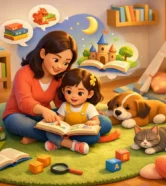



The hardest part of bedtime is often not brushing teeth or finding the missing stuffed animal. It is the moment when a child who seemed cheerful all evening suddenly asks for one more snack, one more song, or one more parent to sit beside them. Books for bedtime connection offer a gentle way to meet that moment with closeness before moving toward the next small step in the routine.
For many children, bedtime brings a real shift. The noise and activity of the day slow down, separation from caregivers feels more noticeable, and worries or big ideas can surface. A familiar story will not make every evening easy, but it can create a dependable pause: a time when a child feels noticed, listened to, and safely held in the rhythm of family life.
Why bedtime stories can feel so grounding
A bedtime book does more than fill the minutes before lights-out. Reading together gives children a predictable sequence: cuddle in, turn pages, hear a trusted voice, say goodnight. That repetition can support a sense of security, especially when the rest of the day has been busy, different, or emotionally full.
The value is not in making a child sleepy on command. Some children settle quickly after a story; others need more time, movement, or reassurance. The deeper benefit is connection. When a caregiver follows the same story ritual with warmth and reasonable limits, the child learns that bedtime includes both comfort and a clear path toward rest.
Stories also give families shared language. A child may not say, “I am feeling nervous about being apart,” but they may say, “I feel like the character when the room gets dark.” That is a meaningful opening. Instead of correcting or rushing past the feeling, a parent can respond, “That makes sense. What helped them feel safe?”
What makes books for bedtime connection different
The most helpful bedtime stories are not necessarily the longest, funniest, or most elaborate. They are stories a child wants to return to, with a soothing pace and an emotional landing that feels safe. For younger children, that may mean simple language, repeated phrases, and familiar scenes such as pajamas, a bath, a favorite blanket, and a goodnight kiss. Older preschoolers and early elementary children may enjoy a small nighttime adventure that ends with the character returning home, proud and ready to rest.
Personalization can make that routine feel especially meaningful. Rather than watching a distant character solve a bedtime problem, a child can see themselves as the active explorer in a story shaped around their real life. Their bedroom can look familiar. Their dog can curl up at the foot of the bed. Their grandmother’s goodnight phrase, home language, or family tradition can be part of the scene.
High-quality illustrations matter here because children often read pictures before they read words. A calm, carefully illustrated room, a recognizable family, and consistent character details help a child enter the story without having to work hard to understand it. When the main character looks like them from page to page, wears their favorite rocket pajamas, and carries the same well-loved stuffed bunny, the book feels less like a generic lesson and more like a comforting place to visit.
A personalized story idea for a bedtime routine
Imagine a personalized MapleKids book called Maya and the Moonlit Goodnight Trail. Maya is four years old, loves fire trucks and her orange tabby cat, and has recently begun calling for her parents after lights-out. The story begins with Maya noticing that her room feels very quiet after a busy day. Her cat, Marmalade, invites her to follow a moonlit trail through her home.
At each stop, Maya completes one familiar bedtime step: placing her book on the shelf, taking a sip of water, choosing a cozy thought, and giving Marmalade a gentle goodnight pat. The story does not portray her as suddenly fearless or perfectly calm. She can still say that she wishes Mom or Dad could stay longer. A caring adult in the story validates that feeling, then reminds her of the little goodnight plan they practice together.
By the final page, Maya returns to her own bed, where the moonlight makes a small silver path across her blanket. She knows where her parents are, what will happen next, and what she can do if she needs comfort: hug her bunny, take a slow breath, and remember the trail. The ending is quiet, reassuring, and age-appropriate rather than dramatic.
That same book concept could look very different for another child. A child who loves dinosaurs might travel through a sleepy dinosaur museum. A child in a multilingual household might hear familiar goodnight words in two languages. A family with two dads, a single parent, grandparents as caregivers, or siblings sharing a room can see their actual home life reflected with care. The goal is not to force one version of bedtime onto every family. It is to create a story that respects what comfort, family, and routine mean in that child’s world.
How storytelling supports small, realistic steps
Bedtime resistance often gets described as misbehavior, but children may be communicating a need for connection, control, reassurance, or more time to transition. That does not mean parents must extend bedtime indefinitely. It means the boundary can be offered with empathy.
A personalized story can gently introduce one small, achievable action rather than asking a child to transform all at once. Perhaps the character chooses one stuffed animal before bed instead of carrying the whole collection. Perhaps they practice staying in bed until the end of one lullaby. Perhaps they learn that a parent will return for a brief check-in after folding laundry.
Seeing themselves practice that step in a story can make the real-life version more familiar. Children often enjoy repeating a phrase from a book, such as, “My room is cozy, and my grown-up is near,” or “First story, then snuggle, then sleep.” These phrases are not magic scripts. They can, however, create shared language that feels kinder and easier to remember during a tired moment.
Two ways to make the ritual work at home
Keep the reading ritual small enough to repeat. A beautiful bedtime routine does not need an hour of themed activities. For many families, ten quiet minutes with the same book, the same reading spot, and a simple ending phrase is more sustainable than a complicated plan that only works on ideal evenings.
Let the child participate without handing over every decision. They might choose between two books, turn the pages, point out their pet in an illustration, or say the final goodnight words. The adult still leads the sequence. This balance can help children feel included while keeping bedtime clear and predictable.
If a child asks for the personalized story again and again, that repetition is not a problem to solve. Re-reading lets them revisit the same emotions in a safe setting and notice new details. Over time, the character’s small bedtime choices may become easier to talk about outside the book as well.
Connection first, then a gentle goodnight
A child does not need a perfect evening to benefit from a bedtime story. Some nights will still include tears, delays, and one more request from the hallway. What matters is that the child experiences a steady message: your feelings are welcome, and bedtime is still a caring routine we move through together.
A thoughtfully personalized story can make that message visible. By placing a child’s face, family, interests, and familiar comforts inside an age-appropriate nighttime adventure, MapleKids creates a keepsake that can support more than reading. It creates a shared ritual where children can feel known before they close their eyes.