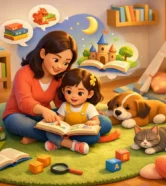



Bedtime has a way of bringing everything to the surface.
The stalling. The extra questions. The sudden big feelings. The need for one more hug, one more sip of water, one more little bit of reassurance.
A child may have seemed fine all day, but once the lights go low, their worries often get louder.
That is one reason custom bedtime stories with a child’s name can feel so meaningful. When a child hears their own name inside a story, something changes. The story is no longer about a faraway character. It starts to feel like it belongs to them.
For families, that small detail can make bedtime feel more personal, more comforting, and more connected.
A personalized bedtime story can give children a gentle way to understand emotions, prepare for changes, and feel proud of who they are, without making storytime feel like a lesson.
What Makes Custom Bedtime Stories Different?
Children naturally notice when something feels familiar.
They notice their name.
They notice a family that looks like theirs.
They notice a character who feels the way they feel.
When those details appear in a bedtime story children often listen more closely. They picture the scenes more easily. They stay with the story because they feel included in it.
Of course, not every personalized book is the same.
Some stories simply place a child’s name into a ready-made plot. That can still be fun, especially for younger children who love hearing their name. But the most meaningful personalized stories go deeper than that.
They reflect the child’s real worlld
A child who is nervous about preschool, adjusting to a new sibling, missing a parent, or learning to feel confident may need more than a cute story. They may need a story that gently meets them where they are.
The best custom bedtime stories use the child’s name, but they also include emotional warmth, family details, and a comforting sense of safety.
That is what helps a child feel truly seen.
Why Hearing Their Own Name Matters at Night
Bedtime is not just the end of the day.
For many children, it is the moment when everything finally slows down. And when things slow down, feelings have space to show up.
A worry that was easy to ignore during playtime may suddenly feel big. A question about school, friends, separation, or change may come out right before sleep.
A story that includes the child’s name can make those feelings easier to approach.
If the character in the story shares their name and gently works through something difficult, the child listening may begin to imagine themselves doing the same.
They may not say, “I feel unsure about making friends.”
But they can listen to a story where they are the hero who takes one brave step.
That can be powerful.
There is also something deeply bonding about reading a story that clearly belongs to your child. It quietly says:
“I know you.”
“I see what matters to you.”
“I am here with you.”
That kind of message can make bedtime feel less like a routine to get through and more like a moment of connection.
Personalized Stories Can Support Emotional Growth
Children do not build confidence only because adults tell them they are brave.
They build confidence through repeated experiences of feeling safe, capable, and understood.
Stories can help with that.
A bedtime story lets a child explore a feeling or situation from a safe distance. When the story is personalized, that experience becomes even more direct. The child can imagine themselves entering a new classroom, facing the dark, handling a family change, or finding comfort after a hard day.
The lesson does not feel abstract.
It feels close.
This is where thoughtful storytelling matters. A strong bedtime story should not rush a child into a happy ending that does not feel real.
If a child is anxious, the story should make room for that anxiety before offering calm. If a child is dealing with change, the story should aknowledge that change before moving toward comfort.
Children can usually tell when reassurance feels too simple.
They do not always need everything to be perfect. They need the story to feel honest.
For parents, caregivers, teachers, and terapists, this makes personalized stories more than a sweet gift. They can become a gentle tool for emotional learning. A story can open the door to conversations that might be hard to start directly.
Not All Personalization Is Meaningful
Personalization can be simple, or it can be thoughtful.
A basic custom story may include a child’s name, favorite color, or favorite animal. That can create excitement, and excitement has value.
But many families want more than surprise.
They want a story that reflects their child’s life with care.
That might include culture, language, family structure, daily routines, emotional needs, or personal challenges. A child in a bilingual home should not have to fit into a one-size-fits-all version of family life. A child raised by grandparents, one parent, two moms, two dads, or a blended family deserves a story that feels natural to them.
The details matter because children notice when they are included.
They also notice when they are not.
This is one reason Maple Kids approaches personalization with a child-centered focus. The goal is not just to place a name inside a story. The goal is to create a story that respects who the child is and what they may be feeling or working through.
When Custom Bedtime Stories Can Help Most
There is no perfect time to create a personalized bedtime story, but some moments make them especially helpful.
Big transitions are one example.
Starting school, moving homes, welcoming a new siibling, traveling between households, or adjusting to a new caregiver can all affect a child’s sense of security.
During those seasons, bedtime stories can offer comfort and predictability.
When the child is the hero of a story that gently reflects their situation, reading becomes a way to practice feeling steady. The story gives them familiar words, a familiar ending, and a safe place to return to.
Custom bedtime stories can also help with common childhood fears, such as:
Fear of the dark
Separation anxiety
Social worries
Trouble settling after busy days
Difficulty sleeping alone
Feeling nervous about change
They can also support identity and belonging.
A child who rarely sees their culture, appearance, language, or family reflected in books may feel something special when those details are welcomed into their own story.
That kind of recognition is not a small thing. It helps children feel that they belong.
How to Choose a Personalized Bedtime Story That Helps
The right custom book depends on what you want the story to do.
If you want a sweet keepsake, a simple name-based story may be enough. If you want emotional support, look for a story that considers your child’s personality, experiences, and current challenges.
The more thoughtfully the story is built, the more likely it is to feel supportive rather than gimmicky.
Tone is also important.
Bedtime stories should feel calming. They can still be imaginative, playful and magical, but they should not leave a child overstimulated right before sleep.
A helpful bedtime story often has:
Gentle language
Emotional warmth
A steady rythm
A reassuring ending
A feeling of safety
It is also worth asking whether the story honors the child’s real life. Does it reflect their family in a respectful way? Does it include details that feel true? Does it make the child feel seen, not just named?
Children may not always explain these things out loud, but they feel the difference.
A Screen-Free Ritual That Still Feels Personal
Many parents want less passive screen time, but they still want something modern, personal, and easy to create.
That is part of what makes personalized storytelling so appealing.
Technology can help create stories that reflect a child’s name, family, emotions, and experiences more closely than a standard book. But the technology is not the most important part.
The real value happens afterward.
A parent sits beside their child.
The child hears their own name.
They smile at a familiar detail.
They ask a question.
They relax into the ending.
The story becomes a shared ritual.
It is not more noise. It is not another screen. It is a quiet moment of connection.
Families are not just looking for more content. They are looking for better ways to feel close.
Why Seeing Themselves as the Hero Matters
Children remember stories that make them feel something.
When they hear their own name in a story where they are brave, loved, safe, and understood, that feeling can stay with them beyond bedtime.
It can shape how they talk about themselves.
It can give them words for their emotions.
It can offer comfort on hard days.
It can help them feel a little more ready for tomorrow.
A personalized bedtime story will not solve every fear or make every night easy. Some children need repetition. Some need time. Some need support from many different places.
But a thoughtful story can become one steady part of that support.
Sometimes bedtime does not need more pressure, more instruction, or more noise.
Sometimes it just needs one gentle reminder:
You belong in this story.
You are loved in this home.
And you are allowed to be exactly who you are.