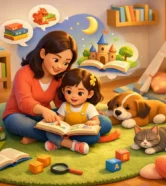



The blocks are on the floor, two children want the same blue one, and a simple playtime moment suddenly feels very big. A parent may hear, “Mine!” while trying to keep everyone safe, calm, and included. Kids cooperation stories can make these familiar moments easier to talk about because they let children see a challenge from a little distance, then imagine a kind next step.
This article focuses on Listening & Cooperation, a Behavior & Emotional Growth topic that is especially relevant for children ages 3 to 8. At this stage, many children are still learning how to wait, listen, take turns, share space, and stay connected when their idea is not chosen. The need is not perfect behavior. It is shared language and small, realistic ways to practice being part of a family, classroom, or friendship group.
Why cooperation can feel hard for young children
Cooperation asks a child to do several challenging things at once. They may need to notice another person’s needs, manage disappointment, remember a direction, and adjust their own plan. That is a lot to ask when they are tired, hungry, excited, or deeply absorbed in what they are doing.
A child who protests a cleanup request or struggles to hand over a toy is not necessarily being difficult on purpose. They may be protecting a game they worked hard to build, wishing for more control, or needing help shifting from one activity to another. Validating that feeling does not mean removing the boundary. It can sound like, “You really want to keep playing. It is hard to stop. Let’s find one way to help together.”
Stories offer a calm place to rehearse this kind of moment. Rather than being corrected in the middle of a conflict, a child can meet a character who feels frustrated, has an idea, makes a mistake, and tries again. When the character is the child themselves, the story can feel even more relevant without making them feel singled out.
How kids cooperation stories create shared language
The most useful kids cooperation stories do not present cooperation as silent obedience. They show it as a relationship skill: listening to what someone needs, expressing a preference, trying a plan, and helping repair a moment that went wrong.
For a preschooler, the story might focus on one simple action, such as putting three toys in a basket before choosing a bedtime book. For an early elementary-aged child, it may include more social nuance: deciding on rules for a backyard game, taking turns to choose music in the car, or helping a sibling rebuild a knocked-over tower.
A story gives families phrases they can return to in real life. “What was the team plan in your book?” may feel more inviting than repeating a command. “Should we try taking turns like you and Grandma did in the story?” can gently remind a child of a strategy they already recognize. The goal is not to script every interaction. It is to create a familiar reference point when emotions rise.
High-quality illustrations matter here because young children often understand a feeling before they can explain it. An illustration can show a child’s disappointed face as a sibling chooses the first game, a parent kneeling nearby, or two friends finding room for both ideas. Those visual details help children notice that cooperation includes feelings, not just actions.
A personalized book concept: The Backyard Team Plan
Imagine a personalized story called The Backyard Team Plan. The main character is a child who wants to build the tallest cardboard rocket in the yard. Their sibling wants to make a fort, and a cousin wants to use the boxes for a pretend pet clinic. At first, each child argues for their own plan.
The child in the book pauses with a trusted grown-up, names what they hoped to make, and listens as the others share their ideas. Together, they create a “team plan”: two boxes for the rocket, two for the fort, and one for the clinic. When a box tears, the children decide whether to fix it, trade materials, or choose another idea. The ending is not that every plan works perfectly. It is that everyone contributes to an afternoon they can enjoy together.
This story can be shaped around the child’s actual world. Their illustrated likeness can wear their favorite rain boots or soccer shirt. The yard can resemble an apartment courtyard, a porch, a park, or a grandparent’s home. A beloved dog might carry off a roll of tape, adding a moment of humor. Their sibling, cousins, two moms, dad, grandparents, or other important caregivers can appear naturally and respectfully.
For a child who loves space, the project may be a rocket. For a child fascinated by animals, it could be a wildlife rescue shelter. For a family that speaks more than one language at home, the story can include the language and everyday expressions that feel most natural to them. These details do more than decorate the pages. They help the child recognize, “This is about a situation like mine. I can try this, too.”
What a cooperation story can gently introduce
A personalized story works best when it focuses on a few achievable behaviors rather than asking a child to become endlessly flexible. In The Backyard Team Plan, the child might practice three small steps: say what they want, listen while someone else speaks, and choose one helpful action.
The helpful action should be concrete. It might be passing the tape, holding a box steady, setting a timer for turns, or asking, “What can I do?” Specific moments make cooperation visible. “Be a good helper” can feel vague to a young child, while “You held the sign while your cousin taped it” shows exactly what helping looked like.
Consistent characters also make a difference across the story. When the child sees the same sibling, caregiver, pet, and home environment from page to page, the emotional lesson has a stable setting. They can follow what happened, anticipate what comes next, and connect the story with their own routines. Familiarity can support repeated reading, which is often where a story’s language begins to settle into family life.
There is a useful trade-off to remember: a story should not make every family disagreement look easy. If the child always shares immediately and everyone is happy, the book may feel disconnected from real experience. A more believable story allows room for a frown, a pause, or a first idea that does not work. It then shows that cooperation can include trying another option, asking for help, or taking a short break before returning.
Bringing the story into everyday moments
After reading, choose one low-pressure opportunity to practice the story’s idea. You might say, “Tonight, we need a team plan for getting ready for bed. Do you want to pick pajamas first or put your toothbrush on the counter first?” Offering two workable choices gives a child some agency while keeping the routine moving.
It may also help to notice effort instead of only outcomes. A child may not be ready to share a favorite toy for a long time, but they might manage to offer a different toy, wait for ten seconds, or explain, “I am still using that.” Those are meaningful early steps. You can name them simply: “You told your friend you were still playing, and you found another truck for them. That was a helpful plan.”
For educators and caregivers, a cooperation story can provide a gentle conversation starter before group activities. Children can talk about what the character wanted, what felt hard, and what helped. There is no need for one perfect answer. The value is in helping children practice seeing more than one perspective.
A story made for one child’s real team
When a child is the active problem-solver in a story, cooperation can feel less like a rule imposed from above and more like a skill they are learning with support. They get to see themselves listen, speak up, make room for others, and remain valued even when a moment is messy.
A Maple-Kids personalized book can turn a real family challenge, favorite interest, and familiar cast of characters into a warm rehearsal for everyday teamwork. Reading it together offers a small pause in a busy day: a chance to connect, name what is hard, and try one kind, possible next step.