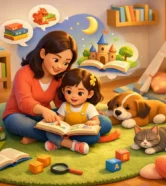



When a child whispers, “I can’t do it,” they are usually not talking only about the task in front of them.
Maybe they are trying to tie their shoes. Maybe they are walking into preschool. Maybe they are being asked to speak in class, sleep in their own bed, or try something new.
Underneath that small sentence is often a much bigger question:
“Am I capable?”
That is where custom books for child confidence can be so meaningful. They give children a chance to see themselves inside a story, facing something hard, feeling unsure, and still finding a way forward.
For many children, confidence does not grow from praise alone. It grows through repetition, connection, and small believable experiences. When a story uses a child’s name, reflects their family, and includes emotions they recognize, the message feels different.
It does not sound like advice from the outside.
It feels personal.
Why Custom Books for Child Confidence Work Differently
Children learn by seeing themselves in others.
When they recognize a character who feels like them, they pay closer attention. When that character has their name, their family, their worries, or their everyday world, the story becomes more than a story.
It becomes practice.
This matters because confidence is not something children either have or do not have. It is built slowly through many small moments where they feel safe, capable, and supported.
A personalized story can help with all of that.
A child gets to imagine themselves trying, feeling nervous, asking for help, making a mistake, and trying again. They get to see that struggle does not mean failure. They get to return to that message again and again, whether it is at bedtime, after school, or before a big change.
Tradtional books about confidence can still be helpful. But they often stay general. They may show a brave child or share a positive message, but the reader still has to make the connection between that character and themselves.
With a custom story, that connection is already there.
What Confidence Really Looks Like in Children
Many adults thiink confidence means being bold, outgoing, or fearless.
But in children, confidence is often much quieter.
A confident child may still be shy. They may still cry. They may still need reassurance. They may still hold a parent’s hand before trying something new.
Confidence does not mean a child never feels scared.
It means they slowly begin to believe, “I can handle this feeling. I can try. I can learn. I am still okay even when something is hard.”
That is why the best confidence-building stories do not turn children into fearless superheroes overnight. They show realistic courage.
A child takes one small step.
They ask for help.
They try again.
They learn that nervous feelings can exist beside bravery.
That kind of story feels more believable. And because it feels believable, it is more useful.
For some children, confidence is also deeply connected to identity. They may need to see their skin tone, language, family structure, culture, traditions, or life experiences reflected in the story.
When children feel represented, confidence grows from a deeper place.
Not just from achievement, but from belonging.
What Makes a Personalized Confidence Book Helpful
Not every personalized book supports emotional growth in the same way.
Some books simply add a child’s name into a general story. That can be fun, and children often enjoy it. But if the goal is to build confidence, the story needs to go deeper.
A strong custom book starts with the child’s real world.
What are they struggling with right now? Are they nervous about school? Are they having trouble making friends? Are they adjusting to a new sibling? Are they afraid to try new activities? Do they often say they are not good enough?
The story should be shaped around the child’s emotional need, not just decorated with their name.
The language matters too.
Children build self-talk from the words they hear again and agaiin. A thoughtful story does not rely only on big praise like, “You are amazing,” or “You can do anything.”
Those words can be nice, but they may not always feel real to a child who is struggling.
Instead, a helpful story might show:
“You took a deep breath.”
“You tried even though it felt hard.”
“You asked for help.”
“You kept going.”
“You learned something new.”
These are the kinds of messages children can actually use later in real life.
Visual details also matter. When a child sees familiar features, family members, routines, or meaningful parts of their life in the book, the story feels more grounded.
Without saying it directly, the book tells them:
“Your story matters.”
When Personalized Storytelling Helps the Most
There are certain seasons in childhood when confidence can feel especially fragile.
Starting daycare or kindergarten can bring up a lot of uncertainty. Moving to a new home, welcoming a sibling, changing schools, dealing with grief, or strugling socially can also shake a child’s sense of security.
During these moments, a personalized story can become a gentle support tool.
It gives families a shared language for what the child is going through. Instead of asking a child to explain a big feeling directly, a parent can talk about what happened in the story.
Because the character is also the child, the conversation feels close. But because it is still a story, it does not feel too direct or overwhelming.
This can also be helpful for teachers, counselors, and therapists.
A personalized book is not a replacement for professional suport when a child needs it. But it can reinforce the emotional skills a child is learning. Stories make abstract ideas easier to understand because children can see them, hear them, and remember them.
A story gives confidence a shape.
How to Choose a Custom Book for Child Confidence
If you are looking for a personalized confidence book, it helps to look beyond the novelty.
A cute book with a child’s name can be special. But a truly helpful book should connect with what your child needs right now.
Start by asking: does this story reflect a real emotional challenge, or is it only giving a general positive message?
General encuragement can be lovely. But a child who is afraid of preschool drop-off, nervous about speaking up, or struggling with low self-esteem may need something more specific.
The story should also feel emotionally honest.
Children can usually sense when reassurance is too perfet. A good confidence story makes room for worry, doubt, frustration, or hesitation before moving toward growth.
That honesty helps the child trust the message.
It is also worth looking at how personalization is handled. Does the book only include the child’s name, or does it thoughtfully include their family, identity, culture, routines, or lived experience?
For multicultural families, multilingual households, blended families, or children who do not often see their daily life reflected in books, this can make a real difference.
Finally, think about whether the book can be read again and again.
Confidence grows through repetition. The most helpful stories are the ones children want to return to because they feel comforting, familiar, and safe.
The Role of Adults During Storytime
Even the most beautiful personalized book works best when a caring adult is part of the experience.
Confidence is built through connection. Before children fully believe in themselves, they often borrow belief from the adults who love them.
Storytime does not need to feel like a lesson. It can be simple.
Pause when your child reacts. Notice what they point to. Let them laugh at the silly parts. Let them go quiet at the emotional parts. If they say, “That’s me,” give that moment space.
You do not have to explain everything.
Sometimes gentle questions are enough:
“Have you ever felt like that?”
“What helped in the story?”
“What do you think happened next?”
“What would you do if you were there?”
And sometimes, you do not need questions at all.
Sometimes the most powerful part is simply siting together and reading a story where the child is loved, capable, and seen.
This is why many families are drawn to thoughtful personalized books from brands like Maple Kids. When personalization is combined with emotional care, the book becomes more than a sweet gift. It becomes a practical support for everyday growth.
What Custom Books Can and Cannot Do
Personalized books can be powerful, but they are not magic.
A book will not erase every fear, stop every negative thought or completely change a child’s personality. Some children need more time, more support, or professional help, and that is okay.
But that does not make these books small.
Stories shape the way children talk to themselves. They help children practice inner language. They create emotional familiarity before real-life moments happen.
If a child has heard a version of themselves say, “I was nervous, but I tried anyway, they may be more likely to reach for that same thought later.
Timing also matters.
A child in the middle of a meltdown may not be ready to absorb a confidence message. But reading the same story regularly during calm moments can slowly build resilience.
The change is often gradual.
What matters most is that the story feels true to the child. Confidence does not grow from being told to be louder, tougher, or less sensitive.
It grows when children feel acepted as they are and gently supported toward what they can become.
A good personalized story offers that kind of invitation.
It tells a child
“You are still you when things feel hard. You are loved while you are learning. You are allowed to grow at your own pace.”
And sometimes, that is exactly what a child needs to hear many times before they finally begin to believe it.