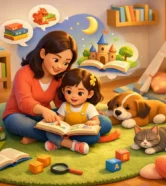



A child who can happily watch one more video may still say, “Books are boring,” when it is time to turn off the tablet. That response is understandable. Screens are designed to move quickly, while reading asks children to slow down, imagine, notice, and participate. The best screen free reading tools do not need to compete by being louder or faster. They can make reading feel personal, cozy, social, and worth returning to.
For MapleKids families, this sits within the Behavior & Emotional Growth topic of Screen Time & Digital Play. It is especially relevant for children ages 3 to 8 who are building a more balanced rhythm around entertainment, independent play, and family routines. A book cannot and should not be presented as a punishment for screen use. Instead, it can offer a welcoming next activity and create shared language for the feelings that sometimes come with stopping.
Choosing the Best Screen Free Reading Tools
The right tool depends on what your child needs most. A preschooler who is still learning how books work may respond to pictures, repetition, and a familiar adult voice. An early reader may want a story they can partly read alone. A child who resists screen transitions may need a predictable ritual that begins before the device is put away.
Look for tools that are easy to reach, suited to your child’s current attention span, and connected to something they genuinely care about. A beautiful book stored high on a shelf is less useful than a small, inviting selection they can choose from themselves.
1. A personalized storybook
A personalized book can be particularly powerful because the child is not only listening to advice from a character. They see themselves practicing a small, realistic step. Their name, illustrated likeness, favorite interests, family members, pet, home routines, and cultural details can make the situation feel familiar rather than imposed.
Imagine a story about Maya, who loves dinosaurs and drawing. After her show ends, Maya feels disappointed and wants one more episode. Her illustrated dog brings her a “dino explorer reading pack,” and Maya chooses a book, finds a cozy spot, and asks her dad to read the first page with her. The story does not claim that she suddenly never wants a screen again. It gently introduces a next step: notice the feeling, say goodbye to the show, and choose what comes after.
High-quality illustrations matter here. When the child’s character looks consistent from page to page, children can follow the emotional arc and recognize themselves as capable participants. A story can include their real family structure, home language, traditions, or bedtime routine so the reading experience feels intentionally made for them.
2. A small, rotating book basket
A basket with five to eight books is often more inviting than an overflowing shelf. Include a mix of familiar favorites, library books, nonfiction, and one book slightly above your child’s current comfort level for shared reading. Rotate a few choices every week or two, rather than replacing everything at once.
Place the basket where screen transitions happen: near the couch, in the bedroom, or beside the spot where devices are charged. The goal is not to force a choice. It is to make the next choice visible. You might say, “The tablet is resting now. Would you like to pick a book for us, or should I pick one?”
3. Wordless picture books
Wordless books are useful for children who are not yet reading independently, children learning more than one language, and children who have strong ideas but hesitate when asked to read aloud. There is no correct script. Your child can describe what they notice, predict what happens next, or tell the story in the language that feels most natural at home.
They can also lower the pressure after a stimulating screen activity. Rather than asking a child to sit still and decode words immediately, a wordless book invites them to look, point, laugh, and lead. This still builds important reading habits: tracking a sequence, noticing visual clues, and connecting events.
4. Read-aloud books with repetition
Books with repeated phrases give children a role, even before they can read most of the text. They can join in on a silly line, echo a character, or complete a familiar sentence. That active participation can make a print book feel more engaging without needing sound effects or animation.
Choose stories with enough room for conversation. Pause to ask, “How do you think he feels when the game ends?” or “What could she do while she waits for another turn tomorrow?” Keep questions light. The purpose is connection, not a quiz.
5. Early-reader books that match a real interest
For a child beginning to read, an interest-led book can be more motivating than a book selected only for a reading level. A child fascinated by trucks, ocean animals, magic tricks, soccer, or baking may work harder to read a few short sentences when the subject matters to them.
Reading level still matters. If every page is a struggle, the book may create frustration at the very moment you are trying to make reading a positive alternative. Try a simple pattern: your child reads a word or short line they know, and you read the rest. Over time, they can take on more when they are ready.
6. A cozy reading cue
Sometimes the most helpful reading tool is not a book at all. A particular pillow, blanket, reading chair, or small book light can signal that the family is shifting into a quieter part of the day. These cues are especially helpful before bedtime, after school, or after a planned period of digital play.
Keep the setup simple and safe. It does not need to look like a themed reading corner from a catalog. A soft place to sit and a consistent routine are enough. The repeated message is, “This is where we settle together.”
7. A simple screen-to-story routine card
Children often manage transitions better when they know what comes next. A small picture card can show a short sequence: finish the show, put the device in its charging place, choose a book, then move to the next part of the routine. For young children, photos or simple drawings may work better than written instructions.
Start with one achievable transition each day. For example, after dinner, the tablet goes away and one short story follows. If your child is upset, validate that first: “You wanted to keep watching. Stopping is hard.” Then offer the familiar next step without arguing: “It is book time now. Do you want the animal story or the space story?”
Make Reading a Bridge, Not a Battle
Screen-free reading works best when it is not framed as what a child has to do because they enjoyed a screen. Children deserve room for recreation and digital play, and families have different schedules, needs, and values. The aim is to build variety and help children experience other ways to rest, learn, imagine, and connect.
It also helps to separate independent reading from together reading. A child who is tired or dysregulated may not be ready to look at a book alone, but they may accept sitting nearby while an adult reads for five minutes. That still counts. Shared reading can support a calmer transition because the child does not have to manage the change by themselves.
If a child consistently rejects books after screen time, shorten the expectation. Try one page, one funny poem, or a wordless-book conversation. Notice what draws them in: animals, jokes, family stories, facts, or being the one who turns the pages. Small successes are more likely to create a lasting habit than a long reading session that ends in frustration.
A Story That Belongs to Your Child
A personalized MapleKids book can turn a common screen-time challenge into a story a child wants to revisit. One child might become a brave forest explorer who parks a digital map and follows real clues around the house. Another might be a young astronaut who learns that mission control needs a quiet story break before tomorrow’s launch. The plot can reflect the child’s actual routines and include the people, places, languages, and interests that make their life recognizable.
When children repeatedly see a character who looks like them name a hard feeling and choose one manageable next action, the story creates a gentle rehearsal for real life. Leave the book within reach, read it when everyone is calm, and let its familiar pages become one more comforting way your child can move from “one more video” to “what should we read together?”