A child who confidently explains how rain forms at home may still go quiet when a teacher asks for an answer. Another may love building elaborate block cities but resist opening a workbook. These moments are a useful reminder that learning is not only about what children know. It is also about whether they feel safe enough, interested enough, and capable enough to use what they know.
When parents ask about children’s learning trends 2026, many are looking beyond flashcards, apps, or earlier academic milestones. They want learning experiences that hold a child’s attention while protecting curiosity, confidence, and connection. For families, caregivers, and educators, the most meaningful shift is toward learning that feels personal, active, and rooted in everyday life.
This article fits Maple-Kids’ Behavior & Emotional Growth category, within the School & Learning topic. It is especially relevant for children ages 4 to 8 who are building school confidence, adjusting to classroom expectations, or discovering what helps them engage with new ideas. The goal is not to make every child learn in the same way. It is to create small, encouraging opportunities for a child to see themselves as someone who can wonder, try, make mistakes, and keep going.
Children’s Learning Trends 2026: What Families May Notice
One clear direction in children’s learning is a greater appreciation for the whole child. Academic skills matter, but so do attention, emotional safety, communication, imagination, and a sense of belonging. A child who can say, “I’m not sure yet,” or “Can I try another way?” is practicing skills that support learning far beyond one lesson.
This does not mean children need constant entertainment or that every activity must be customized. Repetition, routines, and a little productive struggle all have a place. The difference is in how adults frame them. Instead of treating reluctance as laziness or lack of ability, families can become curious about the barrier. Is the task too unfamiliar? Does the child need to move before sitting? Would they feel more ready after seeing an example? Are they worried about getting it wrong?
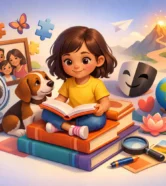
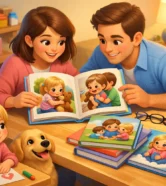
Personalized storytelling can make these questions easier to explore. When a child sees a character who looks like them, lives with their family, and shares their interests, the story can feel less like a lesson delivered at them and more like a familiar invitation. That emotional closeness gives children room to consider a new strategy without feeling singled out.
Learning Through Play Still Has a Serious Purpose
Play is not separate from learning. It is often where children practice it most willingly. Pretending to run a bakery can involve counting, turn-taking, language, planning, and problem-solving. Building a train track may involve spatial reasoning and persistence. Making up a story about a lost puppy can strengthen sequencing, empathy, and vocabulary.
The value is not in turning every playful moment into a quiz. In fact, too many questions can interrupt a child’s focus. A simple observation is often enough: “You kept trying different pieces until that bridge stayed up.” This kind of language notices effort and strategy rather than only praising a finished result.
For school-age children, stories can gently connect playfulness with real classroom experiences. A child who loves dinosaurs may be more willing to imagine asking a question during science time if the story begins with their own dinosaur sketchbook. A child who enjoys drawing might relate to a main character who uses pictures to organize a thought before sharing it aloud. The interest is not a decorative detail. It is the bridge into the skill.
Why Familiar Characters Help Children Practice
Children often understand a lesson more deeply when it is attached to a relationship, a place, or a problem they recognize. Generic stories can be enjoyable, but a personalized book can create a stronger sense of ownership. The child is not simply watching another character learn. They are invited to picture themselves taking the next small step.
Consider a personalized School & Learning story called Maya and the Museum of Big Questions. Maya is starting kindergarten and loves ocean animals, purple rain boots, and visiting her grandfather on weekends. In the book, she discovers that every classroom question becomes a glowing exhibit in a friendly museum. When she does not know an answer, she learns to say, “I wonder if…” and adds her question to the collection.
Her illustrated likeness appears consistently from page to page, alongside her family and her rescue dog, Pepper. High-quality illustrations can show the nervous look before raising a hand, the pause to take a breath, and the quiet pride after sharing an idea. These details matter because children read faces, settings, and emotions alongside words. The story does not promise that Maya will never feel shy. It shows that being unsure and participating can happen together.
For another child, the same learning goal could take a completely different shape. A multilingual family might include the languages spoken at home. A child who has recently moved could see their new neighborhood and classroom. A child who uses mobility supports, communicates differently, or learns best through visuals can be represented naturally in the story world. The purpose is not to make difference the plot problem. It is to let the child recognize their real life as a place where learning belongs.
From Story Time to Everyday Practice
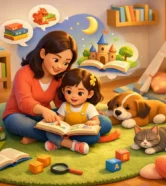
A personalized story works best when it is not treated as a one-time lesson. Reading it repeatedly creates shared language that can feel calmer and more supportive than a correction in a busy moment. After reading about Maya’s big questions, a parent might say, “Do you have a museum question for tomorrow?” before school. The child can answer, draw it, or simply think about it.
Keep the next step small. If a child feels uneasy about school, the goal might be greeting one familiar adult, choosing one book from the classroom shelf, or telling a caregiver one thing they noticed that day. Small successes can support confidence because they are achievable and specific.
It also helps to separate encouragement from pressure. “You have to speak up today” can feel heavy for a child who is already worried. “You can listen first, and if you want, you could share one idea” leaves room for agency. Some children will need more time, and that is okay. The story can be a rehearsal space, not a demand.
Two Parent Takeaways to Try This Week
First, notice the learning behaviors beneath the outcome. When your child revises a drawing, asks why something works, or returns to a hard puzzle after a break, name what you see. “You changed your plan when the first one did not work” gives them a useful description of persistence.
Second, choose one predictable moment for a learning conversation. It might be the walk home, dinner, or bedtime. Rather than asking, “What did you learn?” try, “What was something you wondered about today?” A question like this welcomes children who had a joyful day and children who had a difficult one.
The Value of a Story Made for One Child
The most helpful children’s learning trends 2026 do not ask families to chase every new tool or method. They point back to something more lasting: children learn more openly when they feel known. They benefit from clear routines, room for play, adults who notice effort, and stories that make growth feel possible.
A thoughtfully made personalized book can support that experience by placing a child’s name, image, questions, favorite interests, family, and everyday world inside an age-appropriate learning adventure. MapleKids can create Maya and the Museum of Big Questions in the family’s preferred language and shape the details around the child who will hold it. Over time, that book can become more than a bedtime read. It can become a gentle reminder that their questions belong, their efforts count, and they do not have to know everything before they begin.