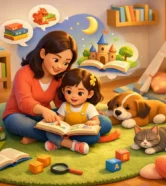



The hard part of bedtime is often not the pajamas or the toothbrush. It is the moment when a child who seemed tired suddenly has one more question, one more feeling, or one more reason to stay awake. A thoughtful personalized bedtime books review should ask more than whether a child’s name appears on the cover. The better question is whether the story can help a family make bedtime feel safer, more familiar, and easier to return to tomorrow.
For children ages 3 to 7, a personalized book can turn a nightly struggle into a shared ritual. It does not make every bedtime quiet or prevent every protest. It can, however, create shared language, give children a gentle picture of the next step, and help them see themselves as capable of moving through a familiar routine.
What makes a personalized bedtime book worth choosing?
The strongest personalized bedtime stories feel written for one child, rather than built from a standard plot with a name added at the beginning. That distinction matters at the end of the day, when children are often seeking connection as much as they are avoiding sleep.
A meaningful book might include the child’s illustrated likeness, their favorite stuffed animal, a parent, grandparent, sibling, or pet, and details from their real bedroom or evening routine. A child who loves trains may follow a little moonlight train that makes its final stop at Cozy Bed. A child who worries after lights-out may carry a lantern with their dog beside them while they check that each familiar part of the house is safe and resting.
The story should also make room for the child’s actual experience. Some children need help with transitions from play to pajamas. Others find darkness uncomfortable, want a parent nearby, or feel energized after a busy day. A book that recognizes these feelings without making the child seem difficult can be far more useful than one that simply tells them to sleep.
Look for a child who has agency
At bedtime, adults guide the routine, but children still benefit from feeling included in it. In a well-made story, the child is an active explorer or problem-solver. They may choose which pajamas their character wears, help their pet settle down, place a favorite toy in its sleeping spot, or take three slow breaths before turning on a night-light.
This approach gently introduces practical skills without turning the story into a lecture. The child sees a character who looks like them practicing one manageable action. Over repeated readings, that scene can become a familiar cue: first we put the toys to bed, then we put our bodies to bed.
Illustration quality matters at bedtime
Bedtime images should invite a child to linger, not add visual noise. Soft, expressive illustrations can show that a child is a little sad to stop playing, tired but still wiggly, or proud after finishing a routine. These emotional details help parents pause and talk together: “It looks like the character had a hard time leaving the game too.”
Consistent characters are especially valuable. When the child, their family members, and their pet look recognizable from page to page, the book feels dependable. For young children, that continuity supports the sense that this is their story and that the routine belongs to their real life, not to a distant fictional world.
A premium book does not need every page to be overly detailed. Too many bright elements, jokes, or plot twists can work against a calming read. The best balance is warm visual interest with an increasingly quieter pace as the story approaches sleep.
Personalized bedtime books review: the trade-offs to consider
Personalization is not automatically meaningful. Some books offer a child’s name, hair color, and little else. That can be exciting as a gift, especially for a young reader seeing their name in print, but it may not be enough to support a specific bedtime need.
A more deeply tailored story takes a little more thought from the adult creating it. You may need to share the child’s interests, family details, language preferences, bedtime challenges, and the small moments that help them feel secure. For many families, that extra effort is the value: the book reflects what their child actually knows and loves.
There is also a practical consideration around tone. A bedtime book should not frame sleep as a test a child can fail. Avoid stories that make children responsible for a parent’s happiness, use fear to push compliance, or promise that one read will solve bedtime. Children may still need closeness, flexibility, and support, particularly during illness, travel, school changes, or big family transitions.
Instead, look for language that validates the feeling and offers a next step. “It can be hard to stop playing when your body is still busy” is more helpful than “Good children go to sleep right away.” A story can support a routine while leaving room for a child’s individual temperament and a family’s values.
A MapleKids story concept for a calmer routine
Imagine a personalized book called Nora and Pepper Follow the Sleepy Star. Nora is a five-year-old who loves drawing, sleeps with her plush fox Pepper, and often asks for another game after bath time. The story begins with Nora noticing a small star outside her window that is getting ready to travel across the sky.
To help the star on its way, Nora and Pepper complete their own gentle “night journey”: putting crayons in their basket, choosing pajamas, brushing teeth, filling a water cup, and settling into bed. Each step is small and familiar. When Nora says she is not ready to stop drawing, Pepper feels the same way, and the story gives both characters a moment to name that feeling before they choose one last picture for tomorrow.
The illustrations could include Nora’s real family structure, her bedroom colors, Pepper’s floppy ears, and a drawing inspired by a meaningful family memory. If her family speaks more than one language at home, the story can be written in the language that feels most natural at bedtime, or thoughtfully include the words and terms of affection the family uses together.
This is where personalization becomes more than decoration. Nora is not simply placed inside a generic sleep story. Her interests shape the obstacle, her family life shapes the comfort, and her character practices the exact small step that may help her move from play toward rest.
How to use the book beyond the final page
Read the story at roughly the same point in the evening for a week or two, when possible. Repetition is not boring for many young children. It helps them anticipate what comes next and gives the routine a recognizable beginning.
Keep the conversation light. You might ask, “Which step did Nora do before she got cozy?” or “Should Pepper put the crayons away before or after pajamas?” If your child points out a difference between the story and real life, welcome it. “You are right. In our house, we brush teeth before pajamas.” That gives children an appropriate sense of ownership while keeping the routine clear.
You can also choose one story action to practice together. If the book includes placing a favorite toy in a sleeping spot, make that the family’s small bedtime job. If it includes a calming breath, try it once without insisting that it must make the child sleepy. The purpose is connection and practice, not perfect behavior.
The review verdict for families
A personalized bedtime book is most valuable when it feels emotionally accurate, visually calming, and practical enough to carry into real evenings. It should respect that bedtime can be difficult while showing a child that they can take one small step with support.
MapleKids can create this kind of story around a child’s routines, interests, family, culture, pet, and bedtime questions, with high-quality illustrations that keep familiar characters present from beginning to end. The result is not a substitute for a parent’s presence. It is a warm, screen-free way to make that presence feel a little more predictable, personal, and comforting when the lights begin to dim.