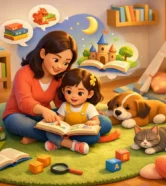



Some children have plenty to say once they feel safe.
At home, they may talk nonstop. They may make up stories, ask questions, sing songs, and share every little thought in their head.
But outside the home, things can feel different.
They may hang back at birthday parties. They may whisper instead of speaking up. They may cling tightly at school drop-off or watch other children play before joining in.
For families living in that tender space, custom books for shy children can be incredibly helpful. They do not push a child to be brave before they are ready. Instead, they help the child feel recognized first.
And sometimes, feeling recognized is the first step toward confidence.
Shyness Is Not Something to Fix
Shyness is not a flaw.
Many shy children are thoughtful, observant, imaginative, and deeply aware of the world around them. They may notice small details others miss. They may need more time to warm up, but that does not mean something is wrong.
The chalenge is that the world often praises children who speak quickly, join in easily, and seem confident right away.
So when a shy child is encouraged to “just say hi” or “go play,” even with love, it can sometimes feel like pressure.
They may hear it as:
“You need to be different.”
That is why personalized storytelling can be so powerful. A custom story does not have to tell a child, “Be more confident.” It can gently show them a version of themselves taking small brave steps while still being exactly who they are.
Why Custom Books for Shy Children Feel Different
A shy child may not always connect with a bold, fearless character.
If the hero of the story is loud, outgoing, and excited to meet everyone, the child may enjoy the book, but the message can still feel far away.
Custom books for shy children make that distance smaller.
The child is not just reading about courage. They are seeing themselves practice it.
Their name is in the story. Their family may be there. Their wories may sound familiar. Their world may look like the one they live in every day.
That matters because children learn through connection. When a story feels close to their real life, it becomes easier for them to understand their own feelings without feeling exposed.
They can revisit the same challenge again and again through a safe, familiar story. No one is rushing them. No one is watching them perform. They are simply reading with someone they trust.
That can bring a quiet sense of relief.
A personalized story can say:
“You are loved as you are.”
“You do not have to become someone else.”
“You can grow at your own pace.”
For a shy child, that message can mean a lot.
What Shy Children Need From a Story
Not every book about confidence is helpful for a shy child.
Some stories show a huge transformation. The quiet child suddenly becomes the center of attention, gives a speech, or makes a whole group of friends in one day.
For some children, that might feel exciting.
For others, it may feel impossible.
The most helpful stories usually focus on smaller, more believable steps.
Maybe the child says hello to one classmate.
Maybe they raise their hand once.
Maybe they walk into a new activity while holding a parent’s hand.
Maybe they stay a little longer than they did last time.
To adults, these moments may seem small.
To a shy child, they can be real victories.
A good personalized story respects the child’s temperament. It does not try to erase their quietness. It does not suggest that confidence means becoming loud or outgoing.
Instead, it shows that a child can participate, connect, and express themselves in their own way.
How Personalized Stories Build Confidence Gently
Stories give children a chance to practice emotionaly before they try something in real life.
A shy child may not be ready to talk directly about their worries. But they may be able to talk about a character who feels the same way.
And when that character has their name, their family, and their world, the connection becomes even stronger.
A personalized story can help in a few important ways.
First, it normalizes the feeling.
The child sees that feeling nervous around new people, big groups, or unfamiliar places is not strange. It is understandable.
Second, it gives them simple coping tools.
Instead of saying, “Be brave,” the story can show what bravery actually looks like. The child might take a deep breath, use a quiet voice, hold a grown-up’s hand, smile at one person, or try one small step.
Third, it gives the child new words for their inner voice.
After hearing the story several times, they may begin to remember its language. They may think, “I can try one small step,” or “I felt nervous, but I did it before.”
That kind of inner language matters.
Confidence is not usually built through one big pep talk. It grows through many small moments where a child feels safe enough to try.
When Custom Books Can Be Especially Helpful
Some children are naturally cautious in social situations. Others become more withdrawn during times of change.
A move, a new sibling, a new classroom, a change in routine, or a stressful event can make a child pull back more than usual.
This is where a custom book can be especially useful.
The story can be shaped around the exact situation the child is facing.
If school drop-off has become difficult the story can gently focus on that routine. If the child wants friends but freezes on the playground, the story can reflect that feeling. If the child is shy while also navigating language differences, cultural identity, or family changes, the story can hold those details with care.
That kind of specificity matters.
A story is more helpful when it connects to the child’s real life.
What to Look For in Custom Books for Shy Children
Personalization alone is not enough.
A child’s name in a generic story can be cute, but it may not give the emotional support the child really needs.
The best custom books for shy children are built around the child’s lived experience, not just surface details.
Look for stories that respect the child’s personality. A supportive story should not rush them or make them feel like they need to become someone completely different.
Gentle pacing matters. Emotional honesty matters too.
The story should acknowledge that something feels hard before moving toward comfort or courage. Children can usually tell when a story skips over the difficult part too quickly.
Representation also matters.
When children see their family structure, skin tone, culture, language, routines, or important relationships reflected with warmth, the story becomes a stronger mirror.
For many families, especially multicultural or multilingual families, this is not just a nice bonus. It is part of helping the child feel fully seen.
It also helps when parents can share meaningful details during the storytelling process. Families know their child best. They know whether the child is shy only in large groups, quiet at school but chatty at home, slow to warm up, or struggling with deeper anxiety.
Those details can make the story much more useful.
Reading the Book Is Only Part of the Value
The book matters, but the way it is read matters too.
For shy children, reading together can become a calm, lowpressure way to talk about feelings.
A parent does not need to turn every page into a lesson. Sometimes the best thing to do is simply read, pause, and notice how the child responds.
Maybe they linger on one page.
Maybe they ask to hear the same part again.
Maybe they point to the character and say, “That’s like me.”
Those moments matter.
Sometimes children open up indirectly. They may talk about the character instead of themselves. They may ask, “Why was she scared?” or “Why didn’t he want to go in?”
That is still a meaningful conversation.
It gives the child a little distance while still helping them explore what they feel.
If the book becomes part of a bedtime routine, it can also create a sense of stability. For children who feel easily overwhelmed, the rhythm of reading together can be just as comforting as the story itself.
A Thoughtful Tool, Not a Magic Fix
It is important to be honest.
No book can instantly change a child’s temperament. And that should not be the goal.
Shyness exists on a wide spectrum. Some children simply need more time, patience, and gentle support. Others may be dealing with deeper anxiety and may need help from teachers, counselors, or therapists.
A personalized book works best as one part of a caring environment.
It can help a child feel less alone. It can give them language for their feelings. It can help them practice courage in a safe way. It can give families a softer way to talk about hard moments.
But it should never be used to pressure a child into performing confidence.
The value of a custom story is not that it forces bravery. It is that it helps bravery grow from a place of safety.
At Maple Kids, that is the heart of personalized storytelling. The goal is to use thoughtful technology in service of something deeply human: helping children feel seen, understood, and gently supported.
When a child hears a story that sounds like their life, holds their feelings with care, and lets them be the hero in a believable way, bravery can stop feeling like a demand.
It can start feeling like a possibility.
Sometimes the first step for a shy child is not speaking louder or joining in faster.
Sometimes it is hearing, again and again:
“You are enough as you are.
And from that safe place, they may slowly begin to reach a little further.