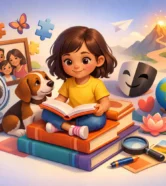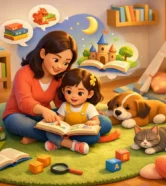



A child may pause at a family photo and ask, “Was I always part of this family?” Or they may notice that another home celebrates differently, speaks another language, or follows routines unlike their own. These are not always big questions, but they are meaningful ones. Books for identity development can give children a gentle, concrete way to see who they are, where they belong, and how their own experiences matter.
For MapleKids, this fits the Knowledge & Discovery topic of Countries & Cultures. It is especially meaningful for children ages 3 to 8 who are beginning to notice family traditions, languages, places, differences, and similarities. The goal is not to give a child one fixed definition of who they are. It is to create room for curiosity, belonging, pride, and respect for others.
Why identity grows through familiar stories
Young children build a sense of identity through everyday details. They learn from the names people use for them, the foods shared at home, the people who care for them, the places they visit, and the stories their family tells. They also notice what is absent. When books repeatedly show only one kind of family, home, language, or celebration, some children may struggle to recognize their own lives in the pages.
A personalized story can make that recognition immediate. Instead of reading about an unnamed child traveling through a generic setting, a child can see themselves preparing a favorite family meal with Grandpa, calling a caregiver by the name that feels right, or packing for a visit to a place that matters to their family. The story says, without turning the child into a lesson: your life is worth noticing.
This matters for children from multicultural, multilingual, adoptive, blended, single-parent, extended-family, or military families, as well as any child whose everyday life does not often appear in standard books. It also matters for children whose lives may look typical from the outside. Every child benefits from understanding that families and traditions can be both deeply personal and wonderfully varied.
A personalized Countries & Cultures story concept
Imagine a book called Maya’s Suitcase of Stories. Maya is preparing for a family gathering that brings together relatives, recipes, music, and memories from more than one country. Her small suitcase is not for clothes alone. Each item inside opens a story: a scarf chosen by an aunt, a recipe card with notes in two languages, a photograph of a grandparent’s childhood home, and a favorite song played at celebrations.
As Maya asks questions, the adults around her share simple answers. Some family members grew up nearby; others arrived from far away. Some traditions are practiced every year, while others have changed as the family has grown. Maya learns that she does not have to choose only one part of herself. Her family story can hold many places, people, and ways of being together.
The same concept can be adapted thoughtfully for a child’s real life. One family may want a story about moving between homes and carrying traditions with them. Another may want to celebrate a child’s heritage language, a religious holiday, a family reunion, or a trip to a parent’s hometown. A child who is adopted might have a story centered on the people and traditions that lovingly make up their life now, while leaving respectful room for questions about their fuller story. The details should follow the family’s comfort and the child’s age.
The book does not need to present culture as a costume, a checklist, or a special occasion. Often, the most meaningful details are ordinary: the breakfast a child eats on weekends, the phrase a caregiver says at bedtime, the shoes left by the door, or the music playing while dinner is made.
What makes books for identity development different
A child’s name on a cover can feel exciting, but identity-centered personalization goes much further. It lets the child recognize their actual world and see themselves as an active explorer within it.
Their illustrated likeness can reflect details that help the child feel seen, such as their hairstyle, skin tone, glasses, hearing device, wheelchair, favorite outfit, or treasured stuffed animal. Their family can appear as it truly is, whether that includes two moms, a single dad, grandparents, stepparents, siblings, chosen family, or loved ones who live far away. A pet can be part of the adventure, too, carrying a recipe card or curling up beside the child as a family story is shared.
High-quality illustrations matter because children read pictures before they read most words. When a home, kitchen, neighborhood, or celebration is drawn with care, the child has more to notice and talk about. A warm image of a familiar dinner table can invite a child to point, remember, and add their own details. It becomes more than decoration. It supports conversation.
Consistent characters matter for a different reason. When the child sees the same version of themselves across the story, they can follow the emotional thread more easily. They are not simply observing Maya pack a suitcase, ask a question, and share a meal. They are practicing the idea that they can ask about their own family, hold more than one tradition, and feel secure while learning something new.
Age-appropriate storytelling keeps the experience reassuring. For preschoolers, the story may focus on simple sensory details, family names, and a repeated phrase such as, “My story has many loving pieces.” For early elementary children, it can include more questions about maps, languages, family memories, and the ways traditions change over time. The right level depends on the child, their questions, and what the family wishes to share.
The value is belonging, not perfection
Identity development is not about creating a polished family portrait. Every family has gaps in its history, traditions that are still being learned, and stories that are complicated or private. Children do not need adults to have every answer ready.
A helpful story can show that questions are welcome. A parent might say, “That is a thoughtful question. Let’s ask Grandma what she remembers,” or “I do not know yet, but we can learn together.” This creates shared language without placing pressure on a child to explain their background to others or represent an entire culture.
It also helps to avoid turning identity into a single label. A child can be proud of their heritage and still have mixed feelings about standing out. They can enjoy a family tradition while also being curious about a friend’s. They can belong to several communities at once. Stories can support this complexity by making room for both certainty and questions.
Two ways to carry the story into daily life
After reading, keep the conversation small and specific. Rather than asking, “What did you learn about your identity?” try, “Which part of the story felt like our family?” or, “What would you put in your own suitcase of stories?” A child may answer with a food, a person, a place, or something unexpectedly funny. All of those answers count.
You can also create a simple family story ritual. At dinner, in the car, or before bed, invite one person to share a memory connected to an object, song, saying, or photo. There is no need to make it formal. Repetition helps children build a living sense of family history, especially when relatives live far away or when several languages and traditions are part of daily life.
A story made for the child reading it
A personalized Countries & Cultures book can support identity development because it begins with the child’s real world rather than asking them to fit into someone else’s. Their interests can shape the adventure: a child who loves trains might travel through family memories by rail; a young artist might draw a map filled with meaningful places; an animal-loving child might be joined by their dog as they gather stories from relatives.
Maple-Kids can turn those details into a warm, age-appropriate story where the child is not a visitor in the pages, but the person asking, noticing, remembering, and belonging. A book like this does not define a child for them. It gives their family a caring place to say, again and again, “Your story matters, and there is always more to learn about it.”