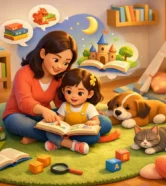



When a child asks, “Where will I sleep on Tuesday?” or quietly packs a favorite stuffed animal for the other home, they are often asking for more than a schedule. They may be trying to understand what has changed, what will stay the same, and whether they are still held securely by the adults who love them. The right books to help children process divorce can make room for those questions without forcing a child to explain feelings before they are ready.
Why stories can help during family change
Divorce can bring many different feelings, sometimes all in the same day: sadness, relief, anger, worry, hope, confusion, or even excitement about a new bedroom. There is no single “right” response, and children may show what they feel through clinginess, big reactions at handoffs, sleep changes, or questions that seem to come out of nowhere.
A calm, age-appropriate story creates a little distance from the child’s own experience. They can notice what a character feels first, then decide whether any part of that feeling sounds familiar. Reading together also creates shared language. Instead of asking, “Are you upset about the divorce?” a parent might gently say, “This character wishes both parents lived in one house. Have you ever had a wish like that?”
Books are not a replacement for honest conversations, reliable routines, or professional support when a family needs it. They can support those things by making difficult moments more approachable and by reminding a child that the adults around them are willing to listen.
8 books to help children process divorce
The best choice depends on a child’s age, temperament, family structure, and the changes they are facing. Some children need a straightforward explanation of two homes. Others respond better to a gentle story about separation, love, and belonging.
- Two Homes by Claire Masurel offers a simple, reassuring picture of a child who has a home with each parent. It can be especially helpful for preschool and early elementary children adjusting to two households.
- Dinosaurs Divorce by Laurene Krasny Brown and Marc Brown explains divorce in direct, child-friendly language. Its broader format may suit older elementary-age children who have practical questions about arguments, custody, stepfamilies, or changing routines.
- The Invisible String by Patrice Karst is not specifically about divorce, but its message about connection across distance can be comforting at bedtime or before a transition between homes.
- Living with Mom and Living with Dad by Melanie Walsh uses clear language and visual details to show that family life can look different in two places. It may help children who are beginning to compare routines between households.
- Was It the Chocolate Pudding? by Sandra Levins follows a child trying to make sense of why parents separate. It gently addresses a concern many children carry privately: the fear that they somehow caused the divorce.
- A Family Is a Family Is a Family by Sara O’Leary is a helpful broader read for children whose family is changing shape. It makes space for many kinds of loving families without presenting one as the standard.
- The Kissing Hand by Audrey Penn is another book that is not about divorce, yet it can offer a tender ritual for separation moments. A familiar phrase or gesture can be meaningful when a child is leaving one parent for the other.
- The Great Big Book of Families by Mary Hoffman can help children see their own family within a wide range of real family experiences. For some children, that wider view eases the feeling of being the only one whose home life looks different.
A book does not have to match every detail of a child’s life to be useful. In fact, a story that is slightly different can sometimes feel safer. Still, children often connect most deeply when the setting, routines, people, and emotions feel recognizable.
What to look for in a divorce book for your child
For children ages 3 to 7, look for short, concrete stories with clear illustrations. Young children usually benefit from language about what will happen next: where they will sleep, who will take them to school, and how they can keep in touch with each parent. Stories that show everyday life in two homes can feel more useful than stories that focus only on the separation itself.
For children ages 8 to 12, a little more detail may be welcome. They may have questions about conflict, new partners, siblings, moving, money, or why adults made this decision. Choose books that answer questions honestly without asking a child to take sides or absorb adult information they do not need.
Across ages, the most supportive stories avoid blame. A child should never be positioned as the messenger, the peacemaker, or the reason for the divorce. Look for books that make room for mixed feelings and reinforce a simple truth: grown-up decisions are not a child’s responsibility, and love can remain steady even when family routines change.
Turn reading into a small, steady ritual
You do not need to turn every reading session into a serious conversation. Sometimes the comfort comes from sitting close and reading the same story again. Repetition gives children a chance to notice new details and return to a feeling when they have words for it.
After reading, try one simple, open question: “What do you think this character needed most?” You could also name what you notice: “That part looks hard,” or, “They found a way to feel close from far away.” If your child changes the subject, that is okay. Being available matters more than getting an answer.
It can also help to connect the book to one practical next step. Before a handoff, a child might choose one comfort item to bring, draw a picture for the other home, or look together at a simple weekly calendar. These small actions do not erase a hard transition, but they can make it feel more predictable.
A personalized story can reflect the child’s real world
General books give children language and perspective. A personalized story can add something different: the feeling that their particular experience has been seen with care.
For a child ages 4 to 8, one Maple-Kids book concept might be “Maya’s Two Cozy Nests.” Maya is the active explorer, not simply a character whose name appears on the cover. She travels between two homes with her beloved orange cat, finds familiar comforts in each space, and learns a small transition routine with both parents: pack her sketchbook, check the calendar, and choose a goodnight message for the parent she will not see that evening.
The story could include Maya’s illustrated likeness, her real interests in painting and soccer, the names she uses for parents or caregivers, and details that make each home feel true to her life. It could reflect a shared-care arrangement, a single-parent household, grandparents who help with pickups, or a multilingual family that uses different words of affection in each home. Consistent, high-quality illustrations let children recognize the same caring adults, pet, and comforting objects from page to page, even as the setting changes.
Most importantly, the story would not pretend every day feels easy. Maya might miss one parent at bedtime, feel nervous before switching houses, and discover that she can ask for a hug, carry her cat’s photo, or say, “I need a little extra time.” That kind of age-appropriate storytelling can support emotional vocabulary while showing one achievable step a child can practice in real life.
A child’s family story deserves more than a generic lesson about divorce. Whether you choose a library book, a familiar favorite, or a book made around your child’s own routines, read with patience and leave room for every feeling. A few quiet pages together can become a dependable place to come back to when the rest of life feels different.