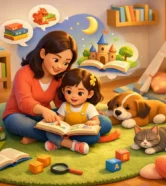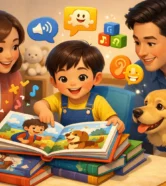



A child may remember a trip to the beach as “the day Grandpa found the tiny crab,” while an adult remembers packing snacks, losing a sandal, and racing the rain home. Both memories matter. But a child’s version often holds the feeling of the day: being safe, included, surprised, and deeply seen.
That is what makes photo storybooks for children so meaningful when they are built around a family memory. For children roughly ages 3 to 8, a familiar photograph can become the starting point for a story they want to revisit. Rather than preserving an event as a collection of images alone, it gives the child an active place within it.
This article focuses on the MapleKids Fun & Imagination topic of Family Memory. The goal is not to create a formal scrapbook or document every detail perfectly. It is to turn one real, emotionally resonant experience into an age-appropriate story that supports connection, identity, language, and joyful family conversation.
Why family memories matter to young children
Young children are still learning how to organize their experiences. They may remember a birthday party, a move to a new home, a visit with cousins, or a first camping trip in vivid fragments. A red balloon. Grandma’s laugh. The smell of pancakes. A dog running through wet grass.
When adults retell these moments with care, children begin to understand that their experiences belong in the family story. This can nurture a sense of belonging, especially during periods of change or when relatives live far away. It also creates opportunities for children to practice language: who was there, what happened first, what felt exciting, and what they noticed.
A memory book is most helpful when it follows the child’s emotional truth rather than an adult’s need for a polished record. Perhaps the big family vacation was wonderful, but the child’s favorite part was sharing a bunk bed with a sibling. That small detail can be the heart of the story.
How photo storybooks for children become more than albums
A standard photo album says, “Here is what happened.” A thoughtfully created storybook can say, “You were part of something special, and your perspective matters.” The difference is in the narrative.
Photos provide immediate recognition. A child can spot their own face, their favorite stuffed animal, their parent’s coat, or the kitchen where pancakes were made. That familiarity draws them in. High-quality illustrations then expand the moment, adding warmth, movement, and imagination while keeping people and places recognizable.
For example, a photo from a rainy-day visit to a city park might become a story about a child named Maya who notices puddles turning into “tiny sky ponds.” The illustrated Maya wears the same yellow rain boots she wore that day. Her dad, her baby brother, and the family’s small black dog appear consistently from page to page. The story can include the real moment they sheltered beneath a tree, then gently imagine the puddle reflections becoming a parade of friendly water creatures.
The child is not simply looking at a past event. She is the explorer who notices, wonders, and helps shape the adventure. This is especially powerful for children who are often talked about but are rarely invited to see themselves as the central voice in a family memory.
A MapleKids book concept: The Day Maya Found the Sky Ponds
A specific personalized MapleKids Family Memory book might be created for a 5-year-old who loves rain boots, dogs, and drawing. The family provides a few photos from a rainy park outing, along with details about Maya’s little brother, her dog Pepper, and the phrase she repeated all afternoon: “The puddles have the sky inside!”
In The Day Maya Found the Sky Ponds, Maya and Pepper set out to find the shiniest puddle in the park. Every page reflects real details from the outing: Maya’s yellow boots, the curved bridge, the snack shared under a shelter, and the photo of her brother laughing from his stroller. The illustrations keep Maya, her family members, and Pepper visually consistent, so the story feels unmistakably hers.
The plot remains simple and suitable for her age. Maya sees her reflection in a puddle, wonders where the clouds go when it rains, and invites her family to look closely with her. By the end, the rain eases, but Maya has learned that an ordinary afternoon can hold a whole world of things to notice.
This kind of book does not need a dramatic lesson. Its value comes from honoring curiosity, preserving connection, and showing a child that her observations are worth remembering.
Personalization should feel intentional, not pasted in
Children notice when a story truly belongs to them. Adding a name to a generic plot can be fun, but meaningful personalization goes further. It considers what made the memory important to this particular child.
A family memory story might include the child’s photo or illustrated likeness, their preferred hairstyle, glasses, mobility aid, favorite clothing, or comforting object. It can reflect parents, grandparents, siblings, foster family members, close friends, or chosen family in ways that feel natural. A book about Lunar New Year, a family reunion, a neighborhood festival, a first snow day, or a weekend cooking a traditional dish can reflect a family’s language, cultural background, and everyday rituals with respect.
The details should serve the story rather than crowd it. One treasured phrase, a familiar pet, and a recognizable place can carry more emotional weight than trying to fit every person and event onto every page. For younger children, a clear beginning, middle, and ending helps them follow along. For older children, more dialogue, richer descriptive details, or a mystery to solve can make the memory feel newly alive.
A book can also be created in the language a family uses at home, including for multilingual households. Hearing a cherished memory told in a familiar language can make the experience feel especially close and can invite grandparents or relatives to share the story too.
Choosing the right memory to turn into a story
The best memory is not always the most impressive one. Look for a moment your child already brings up, reenacts in play, asks questions about, or remembers with strong feeling. It might be a trip, a celebration, a new pet’s first day at home, a visit with a loved one, or a simple Saturday routine.
When choosing, consider whether the memory has a small emotional arc. Maybe your child felt unsure before their first swim lesson but beamed after blowing bubbles in the water. Maybe they missed a grandparent, then had a joyful video call and made matching drawings. A story can hold both the tender feeling and the warm resolution without forcing a lesson.
It also helps to choose a memory with a few concrete details: a place, a person or animal, an object, and one memorable action. These give the illustrator and story writer material to build a world that feels specific. A single family photo can be enough, but a handful of reference photos may help capture recurring characters and meaningful surroundings more accurately.
Two ways to make the book part of family life
After reading, leave room for your child to respond rather than asking them to recall every detail. You might say, “I love the part where Pepper splashed in the puddle. What do you remember?” If they correct the story or add something unexpected, that is not a problem. It shows they are actively making meaning from the experience.
You can also use the book as a gentle bridge to future memories. Before an upcoming visit, trip, or celebration, reread a previous family memory story together. It can remind a child that new places and big moments are easier to approach when familiar people, routines, and care travel with them.
A keepsake that invites conversation
The most lasting children’s books are often not the ones with the busiest plots. They are the books a child asks to hear again because they recognize themselves in the pages: their face, their family, their questions, their funny little observations.
A personalized Family Memory story from MapleKids can hold that recognition with care. It turns photos and family details into a beautifully illustrated narrative where the child is not an extra in the background, but the person whose experience makes the memory worth telling. Years from now, the book may still offer a simple, powerful message: you were there, you mattered, and we remember this together.