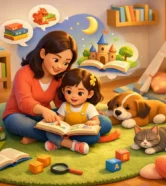



A child hears a character whisper, “I was scared too,” and suddenly the room feels different. The feeling they could not explain at breakfast now has a shape, a name, and a safe little place to land. That is why so many parents and educators use stories for emotional learning – not as a lesson disguised as fun, but as a gentle way to help children recognize themselves, feel understood, and practice what comes next.
Stories work because children rarely learn emotions best through direct instruction alone. Telling a child to be brave, calm down, or use kind words may be necessary in the moment, but it does not always create understanding. A story slows the experience down. It lets a child watch fear, jealousy, frustration, or loneliness happen to someone else first. That small bit of distance can make hard feelings easier to notice without shame.
When a character loses a friend, starts a new school, worries about the dark, or feels left out, children are not just following a plot. They are rehearsing emotional life. They see what a feeling looks like in the body, how it changes behavior, and what comfort or repair might look like. For young children especially, that kind of rehearsal matters because emotional skills are built through repetition, language, and relationships.
Why use stories for emotional learning at all?
Children do not experience emotions in neat categories. A child who looks angry may actually be overwhelmed. A child who avoids a birthday party may be anxious, embarrassed, or simply overtired. Stories help adults and children explore those layers together.
They also make emotional conversations feel less intense. It is often easier for a child to talk about why the bear in the book hid under the blanket than to admit, “I feel nervous at preschool.” Once the child connects with the character, the adult can gently bridge the conversation back to real life. That bridge is where emotional learning begins to stick.
There is another reason stories matter so much. They support empathy from both directions. Children learn to understand others, but they also learn that their own feelings make sense. That second piece is easy to overlook. Emotional growth is not only about managing behavior. It is also about helping a child feel seen.
What children learn when stories carry emotional meaning
A well-chosen story can teach emotional vocabulary, self-awareness, perspective-taking, and coping strategies all at once. It can show that big feelings come and go. It can model repair after mistakes. It can make room for grief, transitions, and identity in a way that feels contained enough for a child to revisit again and again.
This is where the right story matters more than a perfect story. Some books are comforting because they are simple and familiar. Others are useful because they name a very specific challenge, like moving homes, welcoming a new sibling, or feeling different from classmates. It depends on the child, the season they are in, and the emotional skill you are hoping to support.
For some families, representation is part of emotional learning too. When children see their family structure, culture, language, appearance, or lived experience reflected in a story, they receive a quiet but powerful message: you belong here. That sense of belonging strengthens emotional safety, and emotional safety makes learning possible.
How to use stories for emotional learning in everyday life
The most effective approach is usually the simplest one. Read slowly, stay curious, and resist the urge to turn every page into a teaching moment. Children can feel when a story becomes a quiz.
Start by choosing stories that match real emotional moments in your child’s life. If your child is dealing with bedtime fears, friendship trouble, separation anxiety, or a big transition, look for a story that reflects that experience with warmth and honesty. A child does not need a perfect mirror of their life, but they do need enough connection to think, that feels a little like me.
As you read, pause naturally. You might say, “Her face looks worried,” or “I wonder why he got quiet right there.” These small observations help children notice emotional cues without pressure. If they respond, keep the conversation open. If they stay quiet, that is fine too. Listening is part of the process.
After the story, keep your questions gentle and specific. “Have you ever felt like that?” works better than “What is the moral of the story?” You can also ask, “What helped the character?” or “What do you think they needed right then?” Questions like these invite reflection rather than performance.
It also helps to return to the same story more than once. Repetition is not a sign that a child is stuck. Often, it means they are still working something out. The same pages can offer comfort one week and insight the next.
When personalized stories help even more
Some emotional topics are hard for children to transfer from fiction to their own life. A child may care deeply about a nervous rabbit in a book but still struggle to connect that feeling to their own first day of school. That is where personalized storytelling can be especially meaningful.
When a child sees their own name, family context, and emotional challenge reflected in a story, the lesson becomes more immediate and more affirming. They are not just watching a hero handle something hard. They are the hero. That shift can support confidence, emotional language, and a stronger sense that they are capable of growing through difficult moments.
This approach can be especially helpful during transitions or repeated struggles – things like divorce, grief, identity questions, medical fears, moving, or social anxiety. It does not replace support from parents, teachers, or therapists. But it can give those adults a shared tool and a softer entry point for conversation. That is one reason many families turn to personalized storytelling brands like MapleKids when they want reading time to do more than entertain.
What to avoid when teaching emotions through stories
Good intentions can still create pressure. One common mistake is using a story only when a child is already upset and expecting instant change. Stories are powerful, but they are not a quick fix. A book about anger will not erase a meltdown on the spot. What it can do is build familiarity, language, and trust over time.
Another pitfall is overexplaining. If every page comes with a lecture, children may disconnect from the story itself. Emotional learning works best when it feels relational, not corrective.
It also helps to be careful with overly tidy endings. Children benefit from hope, but they also need honesty. Not every fear disappears in a day. Not every problem wraps up neatly. Stories that acknowledge struggle while offering support tend to be more useful than stories that rush to a cheerful solution.
For parents, teachers, and therapists, it is about connection first
Whether you are reading at bedtime, in a classroom circle, or during a therapy session, your presence shapes the emotional value of the story. The child is not only learning from the character. They are learning from the adult beside them who stays calm, curious, and available.
That means you do not need to have perfect words. You just need to notice, wonder, and make space. A simple response like, “That part felt big,” or “I can see why that matters to you,” often does more than a long explanation.
There are trade-offs, of course. Some children love talking during stories. Others need movement, drawing, or pretend play afterward before they can express what landed. Some children connect with animal characters. Others respond best to stories grounded in daily family life. Emotional learning is personal, which is why flexibility matters more than any single reading strategy.
The real goal is not perfect behavior
When adults use stories for emotional learning, the goal is sometimes framed too narrowly. We want fewer outbursts, smoother routines, kinder sibling interactions. Those outcomes matter, but they are not the whole picture.
The deeper goal is helping a child understand that feelings are real, manageable, and worthy of care. It is helping them build an inner voice that says, I know what this feeling is, I am not alone in it, and I can get through it. Stories help children practice that voice long before they can fully explain it on their own.
A well-loved story does something beautiful over time. It becomes familiar language between adult and child. You can say, “This feels like the part when the character needed extra courage,” and your child knows exactly what you mean. That shared reference can soften hard moments and strengthen trust.
If you want reading time to support emotional growth, you do not need a complicated plan. You need stories that feel honest, caring, and close enough to your child’s world that they can step inside. From there, the learning often unfolds quietly – page by page, question by question, one safe conversation at a time.
Sometimes the most meaningful thing a story gives a child is not a lesson at all. It is the steady feeling that someone understands what their heart is trying to say.