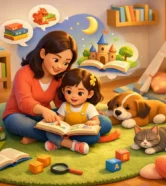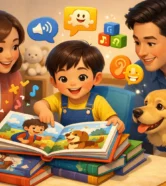



A child pauses at a familiar page because the character is nervous about the first day of school – and the character has their name, their smile, and a family that feels like theirs. That moment matters. It shows how personalized books support empathy in a way many generic stories cannot: by making emotional learning feel personal, safe, and real.
For parents, teachers, and therapists, empathy is not just about teaching children to say, “Be kind.” It is about helping them notice feelings, understand that other people have inner worlds, and respond with care. Young children build those skills slowly, through repetition, language, and relationships. Stories can help with all three. Personalized stories often do even more because they lower the distance between the child and the lesson.
Why personalized books support empathy so naturally
Children learn empathy best when they can connect what they hear to what they live. In a personalized book, the child is not simply observing someone else’s emotional journey. They are placed inside it. When the main character feels left out, worried, frustrated, proud, or relieved, the child is invited to process those emotions from the inside rather than from the sidelines.
That matters because empathy starts with self-awareness. A child who can recognize, “I know what it feels like to be scared,” is more prepared to notice fear in someone else. Personalized books give children a gentle mirror. They can see their own reactions reflected back in story form, often with enough emotional safety to explore big feelings without becoming overwhelmed.
This is especially helpful for children who struggle to talk directly about what they feel. A story creates just enough space. Instead of asking, “Why were you upset today?” a caregiver can say, “It looks like the character felt nervous here. Have you ever felt that way?” That small shift can open a much bigger conversation.
The bridge between identity and compassion
Empathy is often described as understanding others, but children usually get there by first feeling secure in themselves. When a book reflects a child’s name, appearance, culture, family structure, language, or lived experience, it sends a clear message: your story belongs here.
That sense of belonging supports emotional growth. A child who feels seen is often less preoccupied with whether they fit in and more available to notice how others feel. Representation is not a bonus feature in this process. It is part of the emotional foundation.
This is one reason personalized storytelling can be so powerful for multicultural families, blended families, adopted children, bilingual households, or children going through major changes. When stories reflect real life with care, children are not asked to stretch themselves into someone else’s mold before they can engage. They can start from a place of recognition.
From there, empathy expands outward. A story might begin with a child’s own fear of a new classroom, then gently show the feelings of a classmate, sibling, parent, or teacher. Because the child already feels grounded in the narrative, they are more open to following those emotional threads beyond themselves.
How personalized books support empathy through perspective-taking
One of empathy’s core building blocks is perspective-taking – the ability to imagine what someone else may be thinking or feeling. This does not come automatically to young children. It develops over time, and stories are one of the safest places to practice.
A personalized book can guide that practice with unusual clarity. If the child is the story’s main character, they can move through a social situation and begin to notice emotional cues around them. Maybe a friend seems quiet at the playground. Maybe a younger sibling feels left out. Maybe a grandparent misses home. Because the child is centered in the story, these moments do not feel abstract. They feel connected to action.
That is important. Empathy is not only feeling for someone. It also includes asking, “What might help?” A strong personalized story can model that next step: noticing, understanding, and responding. The response might be simple – listening, sharing, apologizing, waiting, including, or offering comfort. For a young child, those are meaningful emotional skills.
Of course, no single book can teach perfect empathy. Children still need guided conversation, everyday practice, and adult modeling. But a personalized story gives adults a shared language. It becomes easier to revisit a hard moment when both adult and child can point to a scene, a choice, or a feeling the character experienced.
Emotional safety makes hard topics easier to explore
Some of the strongest opportunities for empathy appear during stress. A move, a new sibling, grief, social anxiety, a medical challenge, or changes at school can all bring up intense feelings. During those times, children may become more inward-focused, not because they lack empathy, but because their own emotions are taking up so much space.
This is where personalized books can be especially supportive. They can approach a difficult topic in a way that feels contained and manageable. The child sees a version of their experience shaped into a story with warmth and structure. That often reduces defensiveness and helps them stay engaged.
When children feel emotionally safe, they are better able to think about other people’s feelings too. A story about starting kindergarten, for example, can help a child process their own worries while also noticing that classmates may feel shy, teachers may be trying to help, and parents may have mixed emotions at drop-off. The child is not being asked to ignore their own feelings. They are being gently shown that many feelings can exist at once.
That is a core empathy lesson adults use every day, and children can begin learning it early.
Why repetition matters more than perfection
Empathy grows through repeated experiences, not one perfect heartwarming moment. Reading the same personalized book more than once is often where the deeper learning happens. On the first read, a child may focus on the excitement of seeing themselves in the story. On later reads, they may start noticing emotional details, asking questions, or making connections to real life.
This repetition is valuable because young children learn through familiarity. The predictable rhythm of a known story helps them absorb emotional language and social cues over time. A child may not comment the first time a character feels embarrassed or left out. By the fourth or fifth reading, they may suddenly say, “I think she felt lonely.” That is growth.
Adults can support this without turning story time into a lesson plan. Simple pauses are often enough. “What do you think happened there?” “How do you think he felt?” “What could help?” These questions work best when they feel gentle, not like a test.
Personalized books are powerful, but they are not magic
It helps to be honest about the trade-offs. Personalization can deepen emotional connection, but only if the story itself is thoughtful. If a book uses a child’s name without offering real emotional depth, the result may feel cute but limited. Empathy needs more than novelty. It needs a meaningful narrative, believable feelings, and space for reflection.
It also depends on the child. Some children immediately engage with personalized stories. Others prefer a little distance and may connect more easily to a character who is not explicitly them. That is normal. Personalized books are not meant to replace all other books. They work best as part of a balanced reading life that includes both self-reflective stories and stories that widen a child’s view of the world.
The adult relationship matters too. A personalized book read in a rushed or distracted way will not have the same impact as one read with warmth, presence, and curiosity. The story opens the door, but connection with a caring adult is what helps children walk through it.
What this can look like in everyday family life
In practice, the empathy-building power of personalized books is often quiet. It may show up when a child starts naming feelings more easily. It may show up when they connect a sibling’s tears to a story they remember. It may appear when bedtime reading becomes a safer place to talk about jealousy, worry, or kindness.
For educators and therapists, personalized storytelling can also offer a useful bridge between concept and application. Social-emotional themes become more concrete when the child recognizes their own world inside the book. For families who want a screen-free tool that supports both bonding and development, this kind of story can do more than entertain. It can help children practice being understood and understanding others.
That is the heart of why personalized books support empathy. They tell children, with gentleness and clarity, that feelings matter, relationships matter, and their own story is worth paying attention to. When a child learns that truth about themselves, they are often more ready to offer that same care to someone else.
At MapleKids, that is the promise behind personalized storytelling at its best: not just seeing your child in a book, but helping your child see other people more fully too. And that kind of reading tends to stay with a family long after the last page is turned.