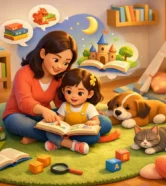



A child pauses at a page and says, “That looks like me.”
For many parents, that moment lands deeper than expected.
If you have been wondering, can books improve child self-image, the short answer is yes. But not all books do it in the same way, and the difference matters.
A child’s self-image is built in small, repeated moments.
It grows through how adults speak to them, how peers respond, what they are allowed to try, and what the world reflects back to them. Books become part of that mirror.
When a child meets characters who feel familiar, capable, loved, and included, reading can support the quiet inner story they are forming about who they are.
Can Books Improve Child Self-Image in Real Life?
Yes, they can, especially when books do more than entertain.
A strong story gives a child language for feelings, examples of resilience, and a sense that their inner world makes sense.
That matters because self-image is not only about confidence in the loud, cheerful sense. It is also about belonging, worth, identity, and the feeling of being safe enough to be fully seen.
For young children, stories often reach places direct advice cannot.
Telling a child “be confident” rarely changes much on its own. But reading about a character who feels nervous, tries anyway, makes mistakes, and still remains loved can shift something slowly and gently.
Children absorb emotional patterns through repetition.
A bbedtime story read again and again can become part of how they understand themselves.
That said, books are not magic on their own.
A book supports self-image best when it is part of a warm relationship. The adult reading it, the conversations around it, and the child’s real-life experiences all shape the impact.
Stories help most when they are paired with real encouragement, emotional safety, and adults who make a child feel valued beyond performance.
Why Stories Shape How Children See Themselves
Children are constantly collecting evidence about who they are.
They notice who gets praised.
Who gets included.
Who solves problems.
Who is allowed to take up space.
Who gets to be the hero.
Books quietly add to that evidence.
When children repeatedly see brave, kind, creative, curious characters, they begin to recognize those qualities as possible within themselves.
If they see characters who share their skin tone, family structure, cultural background, language, disability, fears, or everyday experiences, the effect can be even stronger.
Representation is not just a trend in children’s literature.
It is part of healthy identity development.
This is especially true for children who do not often see themselves centered in mainstream media. A child from a multilingual home, a blended family, a foster situation, or a culturaly mixed background may not need a perfect match in every book.
But they do benefit from stories that tell them, clearly and gently:
“Your life belongs here too.”
Books also help children separate a feeling from an identity.
A child who feels anxious may start to believe, “I am a scared kid.”
A thoughtful story can offer a softer and more accurate message:
“I feel scared sometimes, and I can still be brave.”
That shift may sound small, but for a developing child, it can be powerful.
What Kinds of Books Help Most?
Not every popular children’s book supports a healthy self-image in the same way.
Some books are funny, fast, and memorable without offering much emotional depth. There is nothing wrong with that. Children need joy, silliness, surprise, and play too.
But if your goal is confidence, belonging, or identity support, it helps to choose stories with a little more care.
Books that strengthen self-image often share a few qualities.
The main character has feelings.
The character has agency.
The character grows.
The child in the story is not only rescued by others, but also participates in the solution.
The message is affirming without feeling forced.
The emotional challenge feels real enough for a child to recognize.
It also helps when praise in the story goes beyond appearance or performance.
A book that focuses only on being “special” or “the best” can fall apart when a child later struggles.
Stronger stories celebrate persistence, kindness, curiosity, problem-solving, honesty, and connection.
Those traits give children a steadier foundation than perfection ever could.
Personalized books can be especially meaningful here.
When a child sees their own name, likeness, family context, or emotional challenge reflected in a story, the message becomes much more direct.
Instead of watching someone else be brave, they get to imagine themselves in that role.
Used thoughtfully, that can make encouragement feel believable rather than abstract.
The Role of Personalized Storytelling
There is a reason many children ask for the same book again and again.
Repetition helps them master the emotional world of the story.
In a personalized book, that repettion can reinforce a child’s sense of identity in a very concrete way.
Imagine a child who feels left out at school, nervous about a move, or unsure about becoming a big sibling.
A general story might still help.
But a story built around that child’s own world can feel more precise and more comforting.
It tells them:
“Your feelings are real.”
“Your story deserves attention.”
“You are not alone in this.”
This is where personalized storytelling can do something traditional books sometimes cannot.
It can reflect the child’s exact emotional terrain while still keeping the safety of fiction.
The child gets enough distance to process hard feelings, but enough recognition to feel deeply seen.
For families looking for a screen-free tool that also supports emotional growth, this kind of book can become more than a reading activity.
It becomes a ritual of connection.
Brands like Maple Kids are built around that idea: using personalized stories to help children experience themselves as capable, loved, and worthy of belonging.
When Books Help Less Than Parents Hope
Books cann be powerful, but they do not do everything by themselves.
Their impact depends on the child, the challenge, and the expectations around reading.
A book can open a door, but it may not resolve deeper struggles on its own.
If a child is dealing with bullying, trauma, intense anxiety, ongoing exclusion, or deep distress, a story may offer comfort and language, but they will still need real support from adults.
The same is true if a child resists reading altogether or has not yet found a format that works for them.
Some children connect through listening rather than sitting still with a page. Others need visual simplicity, shorter stories, movement breaks, or more interactive conversation.
There is also a difference between a book that flatters and a book that builds resilience.
Children do not need constant messages that they are amazing at everything.
They need stories that make room for doubt, effort, repair, and growth.
Healthy self-image is not built by pretending life is easy. It grows when children learn that they can face hard things without losing their worth.
How to Use Books to Support Self-Image at Home
The most helpfull reading moments are often simple.
Read slowly enough to notice what your child responds to.
If they point at a page, pause.
If they seem quiet after a line, stay there for a moment.
If they ask for the same part again, let that matter.
You do not need to turn every story into a lesson, but gentle reflection can help.
You might ask:
“Have you ever felt like that?”
“What do you think helped the character keep going?”
“What would you want to say to them?”
Sometimes the best response is even smaller:
“I can see why that part matters to you.”
These kinds of conversations tell children that their reactions are worth listening to.
It also helps to keep a range of stories at home.
Some books should feel like mirrors reflecting your child’s identity and life.
Others can be windows into different experiences, helping your child build empathy and curiosity without losing their own center.
Both matter.
A child’s self-image grows not only from being seen, but also from understanding that they belong in a larger human world
If a particular book clearly gives your child comfort or confidence, let it become part of your routine.
Familiar stories create emotional predictability, and predictability helps children feel secure.
Over time, those repeated words can become inner words.
So, Can Books Improve Child Self-Image?
Yes, especially when the stories are affirming, emotionally honest, and genuinely reflective of the child reading them.
Books can help children feel recognized.
They can strengthen the belief that their feelings make sense, their identity has value, and their voice deserves space.
The real gift is not just that a child enjoys the story.
It is that, little by little, they begin to imagine themselves as someone worthy of care, courage, and connection.
And that is a story worth reading again.